
Last updated: 10.07.26
Munich is ideally located within easy reach of alpine lakes, medieval cities, mountain peaks and even a neighbouring country thanks to its position at the heart of southern Germany.
The destinations around Munich are varied enough to suit every type of traveller, whether you have one spare day or several, from history enthusiasts and castle hunters to hikers and beer lovers.
The city's transport network is one of the best in Germany. S-Bahn and U-Bahn lines radiate outwards, regional train services stretch further afield and well-organised bus tours take care of the logistics for you. Once you have decided on a direction, planning your Munich day trips is genuinely straightforward.
Those who are more into outdoor activities can try the nearby lakes and mountains (see our Hikes Around Munich page, for example), while visitors who are more culturally inclined have medieval towns and castles.
The S-Bahn network makes it remarkably easy to reach some outstanding destinations without having to leave your seat on the train. Tickets are affordable, services run frequently and most of the following stops are within an hour of Munich Hauptbahnhof.
Download the Deutsche Bahn app before you travel to check timetables and buy tickets on your phone. The Bayern Ticket is also a good option if you plan to travel on regional services during the day, as it allows you to travel anywhere in Bavaria for one flat fare, whether you're travelling alone or in a group.
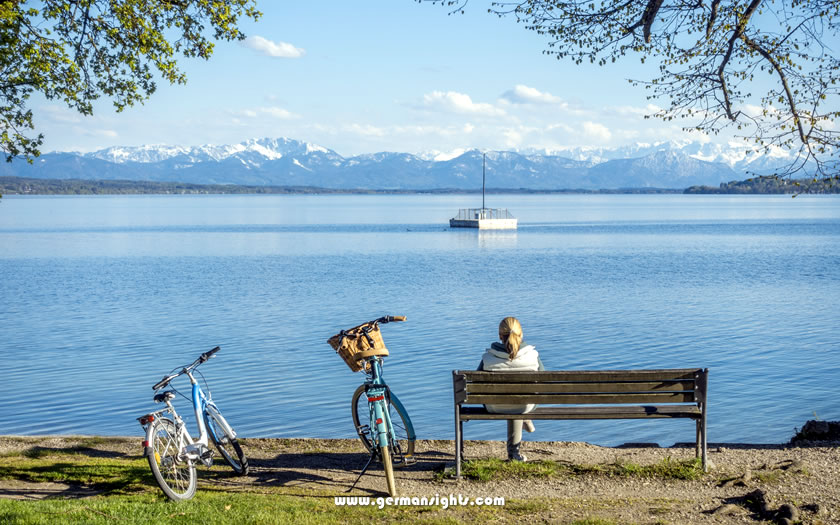
Starnberger See
The Starnberger See is the second largest lake in Bavaria. It takes less than 40 minutes to reach it from Munich Hauptbahnhof on the S6 S-Bahn line. The train arrives right by the lakeside in the town of Starnberg, so when you step off the platform, the water is practically in front of you.
You have several options once you arrive. A ferry service connects the main lakeside towns, including Berg, Tutzing and Possenhofen. This makes it easy to explore the shoreline without any effort.
If you prefer to travel by bike, there is a bike hire service near the station, and the cycle path that circles the entire lake is said to be one of the most scenic rides in Bavaria. The full circuit is around 50 kilometres long, so consider your energy levels before setting off.
The lake itself is strikingly clear, and on calm days, the Alps are beautifully reflected on its surface. In summer, the beaches and lidos along the shore are popular with locals who want to swim. The area has a quieter, more refined atmosphere than some of the more touristy Bavarian lakes, providing a pleasant contrast to the bustle of central Munich.
The lake has a significant historical importance. King Ludwig II drowned in its shallow waters in 1886, in circumstances that were never fully explained. A commemorative cross stands in the water near Berg, marking the spot where he died. It is easily accessible on foot from the ferry stop.
Steve's Insider Tip: Take the early S6 on a weekday if you can. The lake path fills up by mid-morning in summer, but arriving before 09.00 gives you the quietest stretch of the walk before the rest of the day-trippers arrive.
👉 More information about the Starnberger See
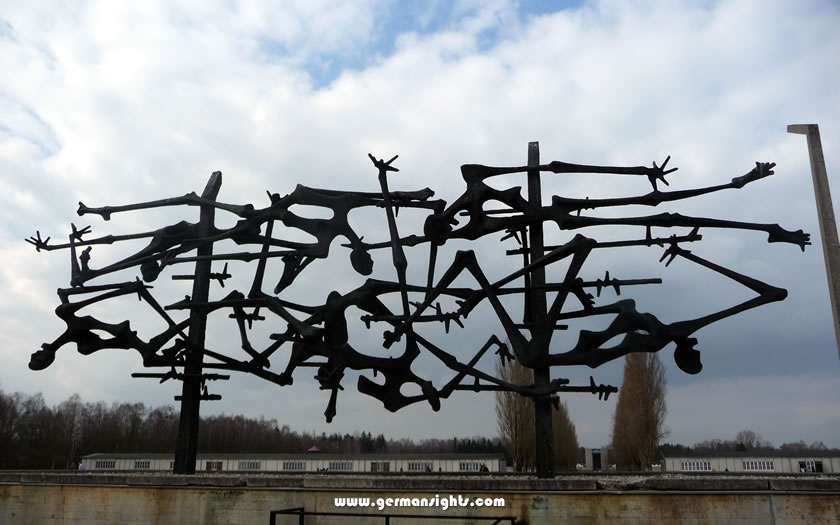
Dachau Memorial Site
A visit to the Dachau Concentration Camp Memorial Site is one of the most important historical experiences you can have while staying in Munich.
The camp is located around 16 kilometres northwest of the city centre, and the journey from Munich Hauptbahnhof takes approximately 25 minutes in total. Take the S2 S-Bahn towards Petershausen, getting off at Dachau station. Board bus number 726 to reach the memorial site directly.
Dachau was the first concentration camp to be established under the Nazi regime, opening in 1933. It remained operational throughout the Third Reich, holding over 200,000 prisoners from across Europe during that period. The camp has been preserved as a memorial and opened to the public since 1965, and walking through it is a sobering experience.
The site is large and warrants at least three to four hours. The main museum, located in the former maintenance building, houses an extensive and unflinching permanent exhibition which traces the history of the camp from its establishment to its liberation by American forces in April 1945. The displays are centred around documents, photographs, and personal testimonies.
Outside, you can walk through the reconstructed barracks and view the roll-call square. You can also visit the crematorium and gas chamber at the far end of the site. There are memorial sculptures by various artists placed throughout the site, as well as religious memorials, including a Jewish memorial, a Protestant Church of Reconciliation, a Catholic chapel and a Russian Orthodox chapel.
Entry to the memorial site is free, although audio guides are available to hire. Guided tours in English depart regularly from the main museum building.
Steve's Insider Tip: The memorial is emotionally demanding and most people underestimate how long they will spend there. Make sure you go on a day when you have no other plans. Rushing through it does a disservice to what happened there.
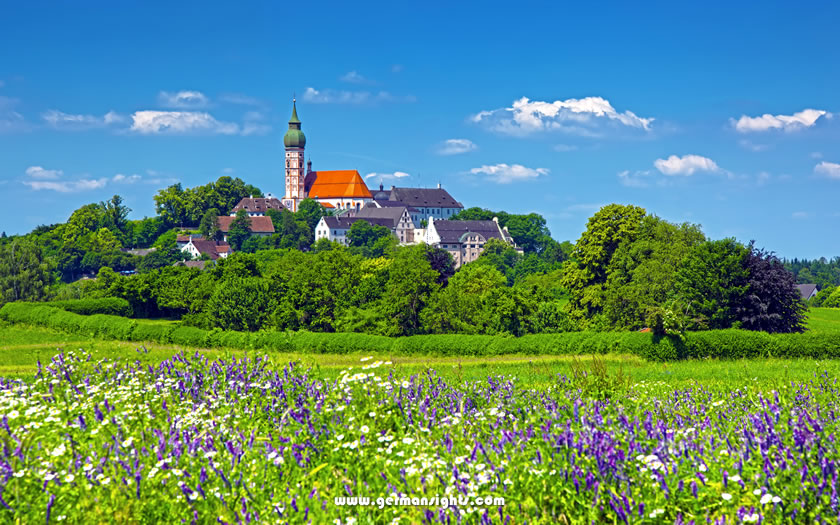
Andechs Monastery
Kloster Andechs is one of those Bavarian destinations where you can experience culture, beautiful scenery and a wonderful beer garden all in the space of a single afternoon.
Take the S8 S-Bahn from Munich Hauptbahnhof to Herrsching for a journey of around 55 minutes. Bus number 951 runs from Herrsching station to the monastery on selected days, or you can walk up through the forest in around 35 minutes - it's a really enjoyable route.
Perched on a hill above the Ammersee, the Benedictine monastery has been a place of pilgrimage since the 15th century. The interior of the Baroque church is richly decorated with gilded altars and ceiling frescoes, and the building itself dominates the surrounding hills and lake. Pilgrims have been making this journey for centuries, and the atmosphere inside remains genuinely devotional.
However, it is the brewery attached to the monastery that draws many visitors. Benedictine monks have been brewing beer here for over 500 years, and the Andechs brewery produces several varieties, including strong dark beer and double bock, which have developed a loyal following. The monastery's beer garden serves these alongside traditional Bavarian food, such as roast knuckle of pork, and the views of the rolling countryside are hard to beat.
It is worth walking down to the shore of the Ammersee after visiting the church and the beer garden. The lake is quieter and less popular than Starnberg, and has a relaxed atmosphere and good swimming spots in summer.
Steve's Insider Tip: The walk up through the forest from Herrsching is clearly signposted and takes you through beautiful woodland. Do it on the way up and take the bus back down if your legs are tired. Combining the hike with a visit to a beer garden is a very Bavarian experience.
👉 More information about Andechs Monastery
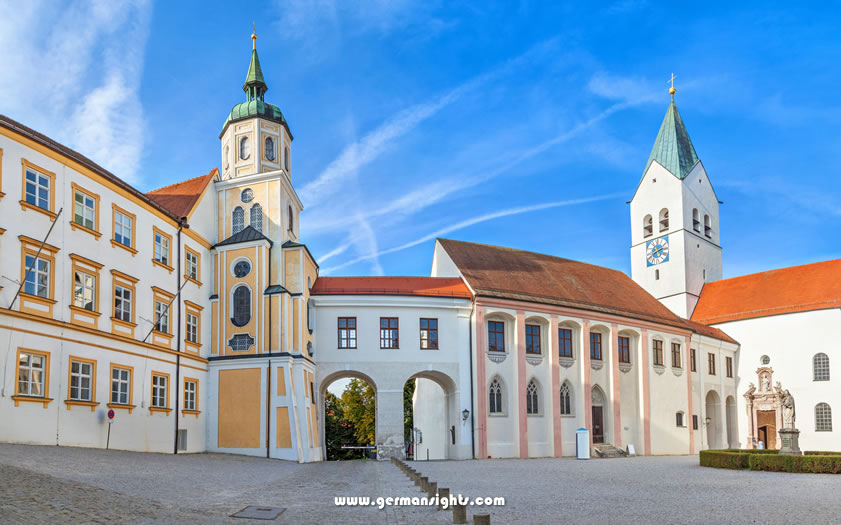
Freising Cathedral
Freising lays claim to being the oldest town in Bavaria. The town is located northeast of Munich and, given its proximity to Munich Airport, is sometimes overlooked by travellers who assume it is purely functional. It takes around 40 minutes to reach Freising from Munich Hauptbahnhof on the S1 S-Bahn line.
The Domberg, the elevated area at the heart of Freising, is the focal point of any visit. Dating back to the 11th century, the Cathedral of Saint Mary and Saint Corbinian is one of the finest examples of Romanesque architecture in Bavaria. Its interior was remodelled in the Baroque style in the 18th century and features an intricately carved crypt beneath the main nave.
The Diözesanmuseum, next to the cathedral, houses an impressive collection of religious art spanning over a thousand years. The views of the surrounding countryside and the Alps from the Domberg are also worth the short climb on clear days.
Freising is also home to Weihenstephan, one of the contenders for the title of the world's oldest operating brewery. Records suggest that brewing began on the site as early as 1040. Today, the site functions as a brewery and beer garden, as well as a campus for the Technical University of Munich's department of brewing and food technology. The beer garden is open in good weather, with options inside if conditions are wet.
Steve's Insider Tip: Combine a visit to the Domberg with lunch at the Weihenstephan beer garden. The two locations are within easy walking distance of each other, and enjoying a Weihenstephan Hefeweissbier on the sunny terrace after spending the morning at the cathedral feels like a very civilised way to spend a weekday.
👉 More information about Freising
The destinations available for Munich day trips expand considerably once you move beyond the S-Bahn network and onto regional and intercity rail services. Most of the following destinations can be reached in two to three hours, making them ideal for a full day out.
The Bayern Ticket is ideal for exploring Bavaria. It allows you to travel on regional trains and local public transport across the state for a fixed daily price, and it can be shared by up to five people travelling together. The Werdenfels ticket is an even more cost-effective option for certain routes into the Bavarian Alps.
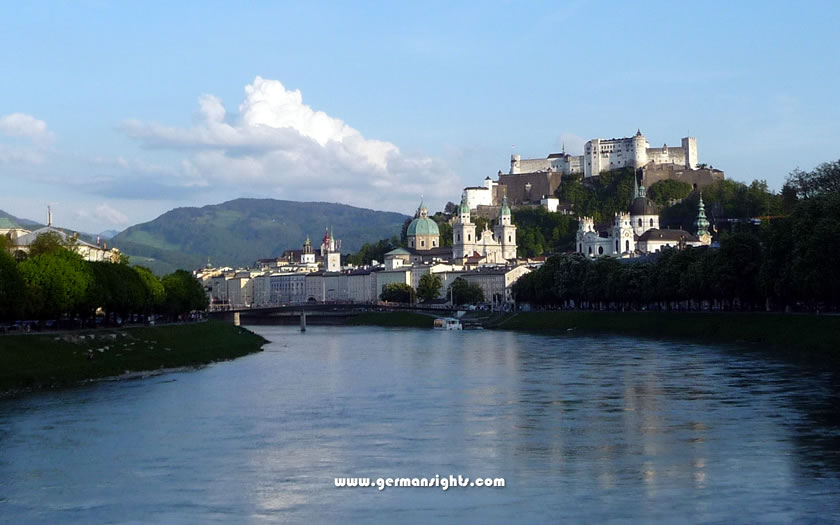
Salzburg in Austria
Salzburg sits just across the Austrian border and is one of the most popular destinations for a day trip from Munich. Direct trains run from Munich Hauptbahnhof throughout the day, and the journey takes approximately one hour and 30 minutes on the faster services. It is worth booking in advance to secure a good fare, particularly at weekends.
The historic centre of the city, known as the 'Altstadt', is a UNESCO World Heritage Site and boasts one of the best-preserved Baroque city centres in the German-speaking world. Walking through its narrow streets feels different to anywhere in Bavaria. Its architecture has a grander, more Italianate quality, reflecting the city's history as the seat of powerful prince-archbishops.
The Hohensalzburg Fortress dominates the skyline above the old town. One of the largest and best-preserved medieval castles in Central Europe, it can be reached by funicular from the old town. The ramparts offer outstanding views of the city and the surrounding mountains.
Another focal point is Mirabell Palace and its formal Baroque gardens, which are particularly popular with fans of The Sound of Music film (partly shot in the city). The gardens are lovely to walk through regardless of their film associations.
Wolfgang Amadeus Mozart was born in Salzburg in 1756, and the city takes its connection to him very seriously. His birthplace on Getreidegasse Street is now a museum, which is well worth a visit if you are interested in the history of classical music.
Steve's Insider Tip: Arrive early. Salzburg is a compact city, and its main attractions get very busy by mid-morning in summer. Arrive at the fortress by 09.00 to enjoy the best views without the crowds.
👉 We go into greater detail on our Day Trip to Salzburg page
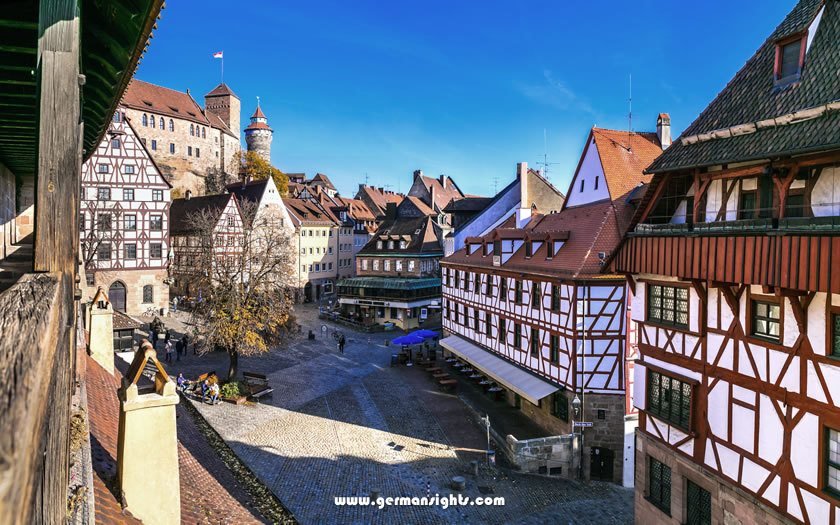
Nuremberg
Nuremberg is one of the most historically rich cities in Germany and offers a day out full of variety. Fast ICE trains from Munich Hauptbahnhof cover the journey in around one hour, making Nuremberg one of the more accessible long-distance destinations.
Bear in mind that the Bayern Ticket is not valid for ICE trains, so factor the cost of a separate ticket into your budget. Regional trains take around one hour and 45 minutes and are Bayern Ticket-compatible.
The medieval centre of Nuremberg was badly damaged in the Second World War, but the principal monuments were painstakingly restored in the following decades.
Nuremberg Castle, also known as the Kaiserburg, is located on a sandstone rock above the old town and served as the residence of the Holy Roman Emperors for centuries. The castle grounds offer excellent views across the rooftops, and the interiors are well worth exploring.
The historic Hauptmarkt market square is one of the most attractive public spaces in Bavaria. Every December, it plays host to one of Germany's most famous Christmas markets, the Christkindlesmarkt, which attracts visitors from across Europe. Visiting the market is a memorable experience, but bear in mind that it gets extremely busy during the weekends leading up to Christmas.
Nuremberg is also burdened by its association with the Nazi era, having hosted the large annual party rallies and, later, the war crimes trials. The Documentation Centre on the grounds of the former rally site provides a detailed and well-constructed account of both events, and is considered one of the most thoughtful historical museums in Germany.
Steve's Insider Tip: Buy your ICE train tickets in advance through the Deutsche Bahn app. Tickets for early-morning departures are often significantly cheaper than flexible tickets, and with an hourly service, you can leave Munich at 08.00 and arrive in the old town before 09.00.
👉 More information about Nuremberg
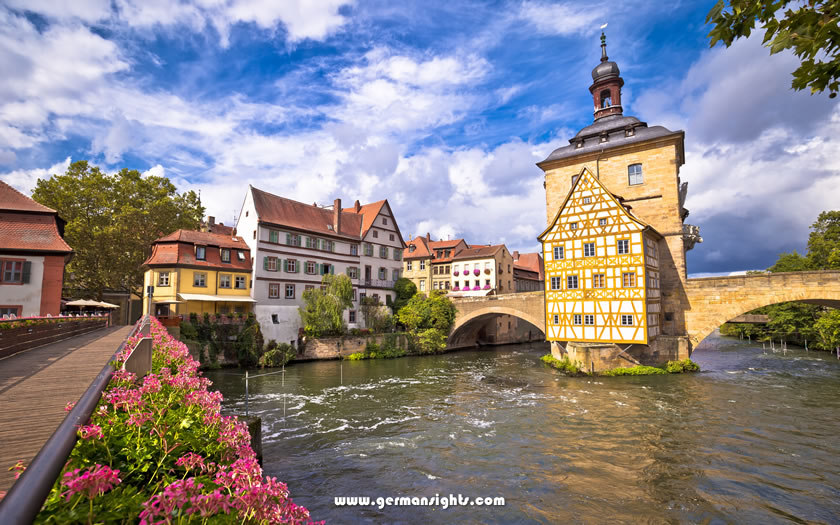
Bamberg
Bamberg is often described as the best-preserved medieval city in Germany, and anyone who has spent time there would find it hard to disagree.
The entire old town was declared a UNESCO World Heritage Site in 1993, and it boasts a remarkable density of historic buildings. The imperial cathedral, known as the Bamberger Dom, is located on a slight hill overlooking the river and houses the renowned tomb of Pope Clement II. Exceptional carved stone figures stand inside the cathedral, and the equestrian statue known as the Bamberger Reiter is considered to be one of the finest medieval sculptures in existence.
Klein Venedig, the area of fishermen's houses built directly over the River Regnitz, is the most photographed spot in the city. The timber-framed buildings sitting on wooden stilts above the water have an incredibly picturesque quality.
The Altes Rathaus (Old Town Hall) occupies an artificial island in the middle of the Regnitz and is another extraordinary sight. According to local legend, it was built there because the ruling bishop refused to grant the townspeople land for a town hall, so they simply built one on the river instead.
Bamberg also produces its own distinctive style of smoked beer, known as Rauchbier. The local brewery Schlenkerla serves it from traditional stone mugs in a centuries-old tavern near the cathedral.
Taking a northbound regional train from Munich Hauptbahnhof, changing at Nuremberg, will get you to Bamberg in around two hours and 20 minutes. ICE trains are quicker and, in some cases, run to Bamberg without a change.
Steve's Insider Tip: Allocate a full day to Bamberg rather than pairing it with Nuremberg. Trying to do both in one day means you rush both. Rather do Bamberg alone at a relaxed pace.
👉 More information about Bamberg
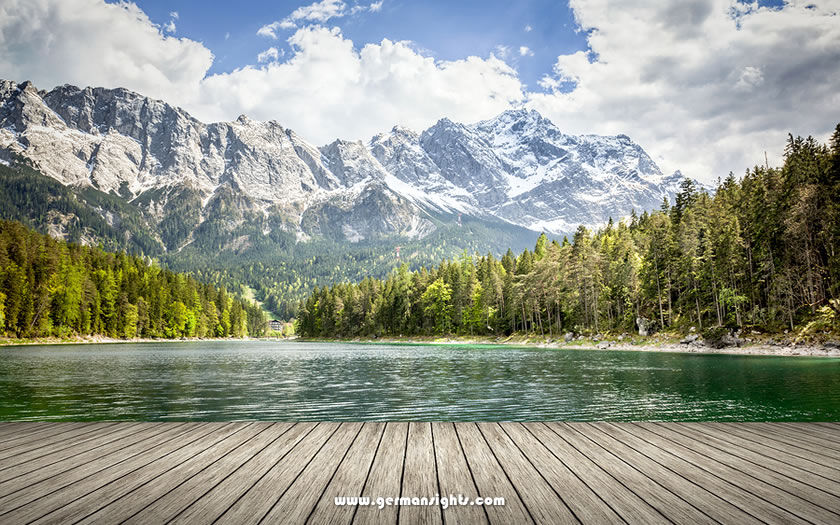
Zugspitze - Germany's highest mountain
The Zugspitze, Germany's highest mountain, stands at 2,962 metres above sea level and offers one of the most dramatic day-trip experiences available from Munich.
To reach the mountain, take a regional train from Munich Hauptbahnhof to Garmisch-Partenkirchen, which takes around one hour and 20 minutes. Once there, you can choose to either board the Zugspitzbahn cogwheel train, which winds its way steeply through tunnels and alpine scenery to the summit, or take a 323 bus to the Eibsee lake and then the cable car from the Eibsee.
The panorama from the summit platform stretches across four countries on a clear day: Germany, Austria, Switzerland and Italy. The viewing platforms are open all year round, but visitors should dress appropriately during the winter months. There is snow on the summit glacier even in the height of summer.
The Eibsee, an alpine lake located at an altitude of around 1,000 metres, is well worth spending at least an hour exploring on your way up or down. The water is an extraordinary shade of turquoise and is surrounded by pine forests and mountain peaks. There is a short circular walking trail that follows the shore.
Garmisch-Partenkirchen itself, the town at the foot of the mountain, is worth a brief walk around. It hosted the 1936 Winter Olympics and has a pleasant Bavarian alpine character with painted facades on many of the older buildings.
The Bayern Ticket covers the regional train to Garmisch-Partenkirchen. The Zugspitze cog railway and cable car require separate tickets, but the Zugspitze Ticket bundles the ascent and descent options together.
Steve's Insider Tip: Cloud cover is common on the Zugspitze, particularly in the afternoon. Check the summit webcam before travelling. Consider focusing on the Eibsee instead if the forecast shows cloud; it is beautiful in any weather.
👉 More information about the Zugspitze and the Eibsee
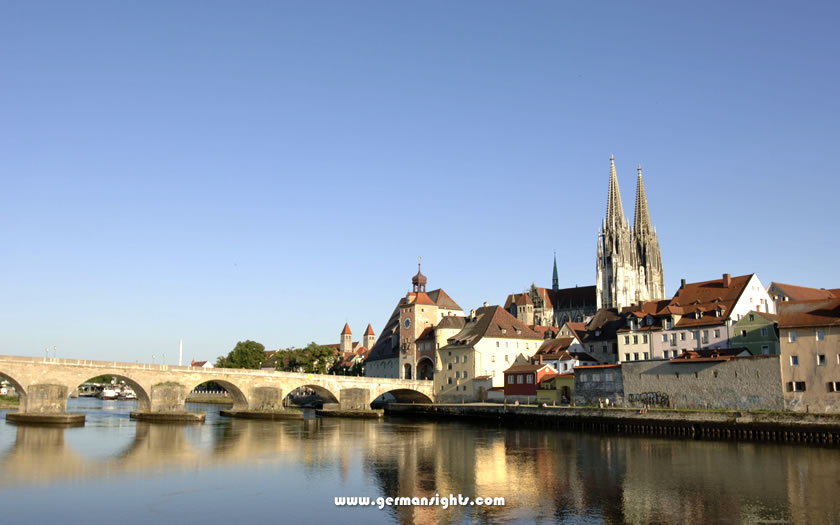
Regensburg
Regensburg is one of the best-preserved medieval cities in Germany, yet it is rarely visited by international travellers. Regional trains from Munich Hauptbahnhof take around one hour and 25 minutes to reach Regensburg, and the Bayern Ticket covers the journey.
The old town is located at a bend in the Danube and has retained much of its medieval character, having escaped serious damage during the Second World War. The entire Altstadt, along with the Stadtamhof district on the opposite bank of the river, was designated a UNESCO World Heritage Site in 2006.
The Steinerne Brücke, a stone bridge built between 1135 and 1146, is Germany's oldest intact bridge. It was the only crossing point over the Danube in the region for centuries, and walking across it today still gives a real sense of the city's historic importance.
The Historische Wurstkuchl, located on the bridge approach, has been selling grilled sausages since around the 12th century, making it one of the world's oldest continuously operating restaurants. The sausages are cooked over an open beechwood fire and served with sauerkraut and sweet house-made mustard.
Regensburg Cathedral, a Gothic structure begun in the 13th century, dominates the old town and contains exceptional medieval stained glass. The internationally renowned Regensburger Domspatzen boys' choir performs regularly at the cathedral.
Steve's Insider Tip: Visit on a weekday if possible. Regensburg is popular with German domestic tourists at weekends, and the sausage stall at the stone bridge can have a long queue.
👉 More information about Regensburg
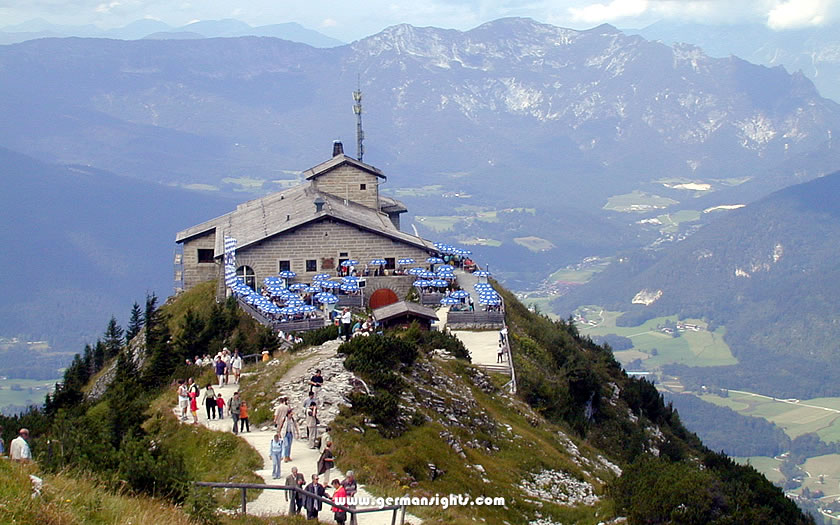
Berchtesgaden and the Eagle's Nest
Located deep in the Bavarian Alps near the Austrian border, Berchtesgaden offers a combination of natural beauty and significant historical associations. This makes it one of the most compelling destinations in this guide.
The journey from Munich Hauptbahnhof takes just over two hours and 30 minutes on regional services and requires a change at Freilassing or Salzburg. The Bayern Ticket covers the route via Freilassing.
The town itself is charming, with traditional Alpine architecture and a compact centre that rewards a short wander. The Berchtesgaden National Park surrounds the area and provides some of the finest mountain walking in Germany, with trails suited to varying levels of experience.
The Königssee is one of the most photogenic spots in Bavaria. This narrow glacial lake cuts deep between towering cliff faces around five kilometres from Berchtesgaden. Electric boats have operated on the lake since 1909 in order to protect the water quality, and crossing to the Chapel of St Bartholomä on the opposite shore is a memorable experience. Traditionally, the boat captains demonstrate the lake's extraordinary echo by sounding a trumpet as the boat passes a particular cliff face.
The Eagle's Nest (Kehlsteinhaus in German) sits at an altitude of 1,834 metres on a ridge above the town. Originally built as a retreat for Adolf Hitler, it is now a restaurant and museum, accessible via a remarkable road cut into the mountainside. A lift inside the rock ascends the final 124 metres to the building. The town's Documentation Centre provides a thorough explanation of the historical context and should ideally be visited before the ascent.
Steve's Insider Tip: Due to snow, the Eagle's Nest road is only open from mid-May to late October. If you're visiting outside of these months, the Königssee and the national park trails are the main attractions. Either way, arrive early, as the Königssee car park fills up quickly on sunny days.
👉 More information about Berchtesgaden
Organised bus tours from Munich are an excellent option for destinations that are hard to reach by train or if you simply want the convenience of having the logistics handled for you. Guides can provide context that you might not find on your own, and the coach drops you off directly at the main sites, so you don't have to worry about figuring out the final connections. Several reputable companies run daily departures from central Munich to the most popular destinations.
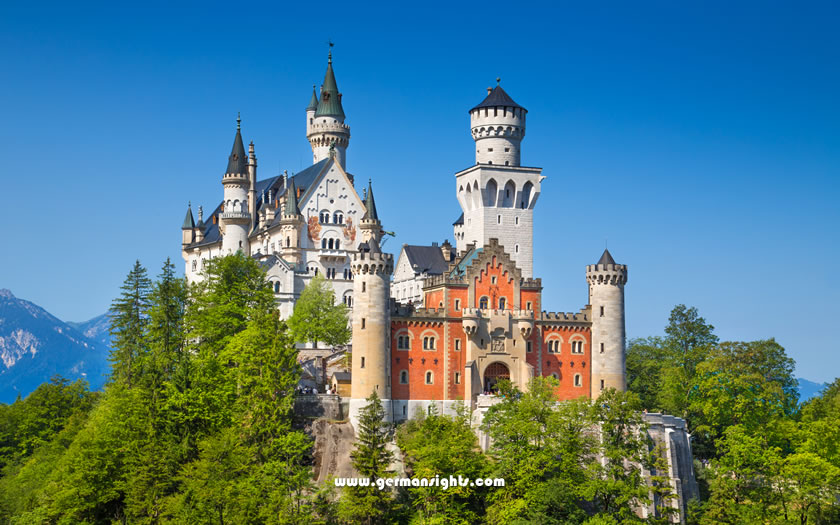
Neuschwanstein Castle
Neuschwanstein Castle is arguably the most recognisable building in Germany. Its fairy-tale silhouette against the backdrop of the Bavarian Alps has inspired everything from the castle in Disney's Sleeping Beauty to countless travel photographs.
It is located near the town of Füssen in the Allgäu region, around 120 kilometres southwest of Munich, and while it is technically possible to reach by train and bus, an organised coach tour removes the stress of timed connections and crowded platforms.
The castle was commissioned by King Ludwig II of Bavaria in 1869 as a personal retreat inspired by the operas of Richard Wagner, rather than as a functional royal residence. Ludwig died in 1886, before the castle was completed, having spent only around 172 nights in it. Despite its unfinished state, it contains an impressive series of elaborately decorated rooms depicting scenes from Wagnerian mythology.
Tours of the interior take around 35 minutes and are conducted in guided groups. It is essential to purchase timed entry tickets in advance, as walk-up availability is extremely limited during peak season. Most organised bus tours from Munich include the castle entrance ticket in their prices or offer it as an optional extra.
Take a photograph from the Marienbrücke, a slender iron bridge that spans the gorge behind the castle - it's the shot that appears on all the postcards. The 15-minute walk up to the bridge from the castle is well worth the effort.
👉 Try a day trip to both of Ludwig's castles - Neuschwanstein Castle and Linderhof Castle by bus
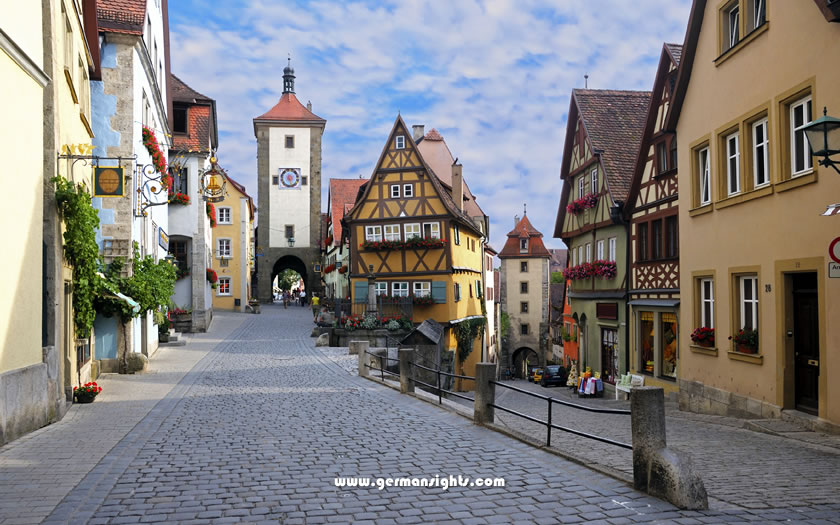
Rothenburg ob der Tauber on the Romantic Road
Rothenburg ob der Tauber is Germany's best-preserved medieval town and a destination that makes visitors feel as though they have stepped into an illustration.
It lies on the Romantic Road, a popular tourist route through the states of Bavaria and Baden-Württemberg, linking a number of historically significant towns. Organised bus tours from Munich usually take around two and a half hours.
The town still has its complete medieval wall, and walking along the ramparts offers continuous panoramic views of the terracotta rooftops and the surrounding countryside. The walk takes around an hour at a comfortable pace and is one of the most enjoyable activities in the town.
The Marktplatz in the centre of Rothenburg is surrounded by the town hall tower and several impressive merchant houses. Climbing the town hall tower treats you to a view of the entire townscape.
The Plönlein, a small cobbled square where two lanes diverge by a half-timbered house and a tower, is the town's most photographed corner and looks almost exactly as it does in pictures.
Open year-round, the German Christmas Museum traces the history of Christmas traditions through its extensive collection of historical decorations and ornaments. It is a diverting visit even outside the festive season. The town itself embraces its year-round Christmas identity, with several specialist shops dedicated to seasonal decorations.
The local speciality is the Schneeball: a deep-fried ball of pastry dough sold in dozens of varieties across the town's bakeries. While it is more of a textural than a taste experience, trying one is an essential part of visiting Rothenburg.
👉 Try a day trip on the bus to Rothenburg ob der Tauber including a stop at Harburg Castle
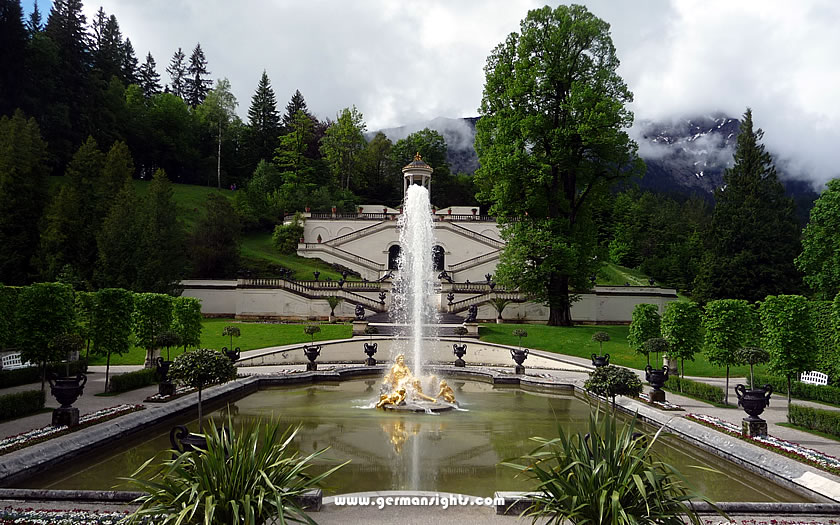
Linderhof Castle fountain
Linderhof is the smallest of King Ludwig II's three palaces and, in many ways, the most personal and fascinating. It is located in the Graswangtal valley near Ettal in the Bavarian Alps, around 90 kilometres southwest of Munich.
The most practical way to reach Linderhof is by organised bus tour from Munich, as the final approach by public transport involves several changes and limited connecting services.
Linderhof is compact and intimate, unlike the grand theatrical ambition of Neuschwanstein or the Versailles-mimicking scale of Herrenchiemsee. Ludwig actually lived here more than at any of his other residences, and the palace feels genuinely inhabited rather than constructed for display. The interiors are lavishly decorated in the Rococo style, featuring mirrored ceilings, gilded furniture and elaborately painted walls.
The palace's grounds are a highlight in their own right. Formal terraced gardens ascend the hillside behind the main building and feature a cascading fountain, classical temples and a gilded statue of Ludwig mounted on horseback.
The Venus Grotto is one of the most unusual features of any royal estate in Europe. Ludwig had a cave that looked natural constructed on the hillside. It was complete with an artificial lake, a gilded, shell-shaped boat and a colour-changing lighting system powered by one of the first electrical generators in Bavaria. Ludwig used it for private retreats, where he would be rowed across the underground lake while listening to music.
👉 Try a day trip to both of Ludwig's castles - Neuschwanstein Castle and Linderhof Castle by bus