
Oldenburg is one of Germany’s best-kept secrets, tucked away in the northwestern corner of Lower Saxony, just a short train ride from the breezy North Sea coast.
This elegant city offers travellers seeking a slower-paced, culturally rich itinerary a delightfully authentic alternative. Classical architecture stands shoulder to shoulder with tree-lined canals here, and the gentle ringing of bicycle bells serves as the city’s unofficial daily soundtrack.
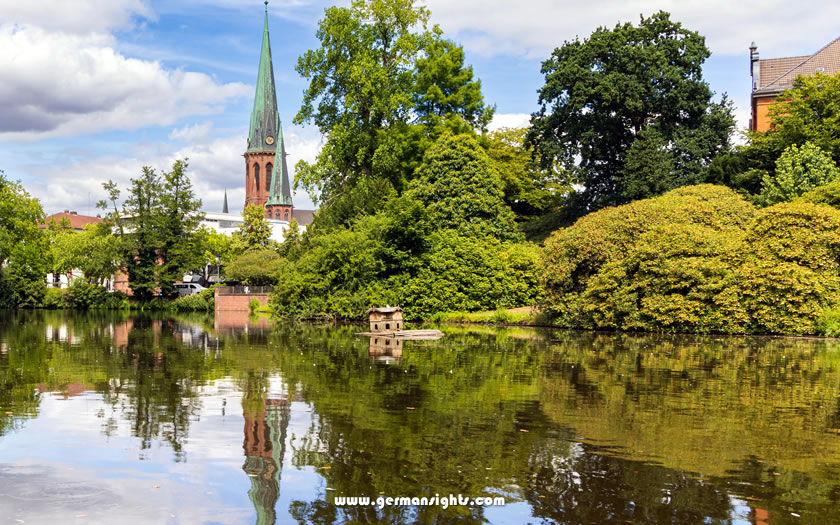
The spire of the Lamberti church in Oldenburg
Despite its relatively unassuming international profile, Oldenburg boasts an aristocratic pedigree to rival that of much larger European cities. For centuries, the city was the grand residence of powerful counts and dukes, leaving behind stately buildings, lush English-style gardens and the magnificent sunflower-yellow Oldenburg Castle (Schloss Oldenburg).
Oldenburg is the ultimate "slow travel" getaway for the English-speaking traveller wanting to step off the heavily trodden tourist trail. Thanks to one of Germany’s oldest car-free city centres, navigating the town is a breeze, making it a dream to explore on foot or by joining the locals on a rented bicycle.
Oldenburg is located in the northwestern corner of Germany. Historically, the city was positioned in a region that connected the North Sea coast with inland trade routes. The city is located on the Hunte River, a small waterway flowing north to join the Weser before reaching the North Sea.
The North German Plain stretches out in all directions from Oldenburg, creating a landscape so flat that even the slightest hill becomes a notable feature. The lack of natural barriers means that roads and railways can follow direct routes, making Oldenburg accessible from multiple directions.
The flat terrain also makes the area ideal for cycling, with dedicated cycle paths connecting the city to the surrounding towns and villages.
The nearest major city is Bremen. The two cities have shared cultural and economic ties for centuries, although Oldenburg remained an independent duchy while Bremen functioned as a free imperial city.
The East Frisian coastline extends along the North Sea, around 50 kilometres north of Oldenburg. A chain of islands, including Wangerooge, Spiekeroog and Langeoog, runs along this coastline, protecting the mainland from North Sea storms.
The Dutch border is located around 80 kilometres to the west, putting cities such as Groningen within reach for extended day trips.
Those who can find flights into the nearby city of Bremen will find the airport there the best option. Those flying long-haul will be better off trying Hamburg, Düsseldorf or even Amsterdam!
Most rail connections to Oldenburg are part of the Bremen S-Bahn regional system. This connects Oldenburg to the North Sea coast as well as to Bremen and Osnabrück. A regular InterCity service connects Norddeich Mole (for the East Frisian islands) through Oldenburg to Bremen, Magdeburg and, eventually, Leipzig.
Oldenburg train station is located around a kilometre to the north of the castle and town centre.
Driving to Oldenburg works well for visitors who want flexibility to explore the surrounding countryside. The city is close to the A29 motorway, connecting to the A1 near Bremen, and the A28 motorway, which accesses the coast. The flat terrain and well-maintained roads make driving straightforward in the region.
If you know when you are planning to go but haven't decided on accommodation, then use the map below to get an idea of which properties are available and to compare prices during the period you wish to travel.
Enter your proposed dates and use the '+' to zoom in on a location and reveal more properties. Click on the price above a property to see more information.
(Please note that this selection will also include some guesthouses, pensions and self-catering apartments for those who are interested in that form of accommodation!)
Oldenburg originated as a Saxon settlement along the Hunte River in the early medieval period. Its very name - meaning 'old castle' - hints at fortifications predating surviving written records.
The settlement grew into a vital trading post where river transport met overland routes. By the 12th century, the Counts of Oldenburg had transformed this crossroads into an administrative centre, building the castle that would evolve into today's grand palace.
The Protestant Reformation arrived in 1526, and the ruling count's adoption of Lutheranism firmly aligned Oldenburg with northern Germany and Scandinavia. This transition unfolded with relatively little of the violence that tore apart other European territories.
When the male line of counts died out in 1667, Danish rule was established through dynastic inheritance, bringing architectural influence, administrative reform and access to Baltic trade networks - although Oldenburg's interests were always answerable to Copenhagen. This Danish period lasted until 1773, leaving a quiet but lasting imprint on the city's character.
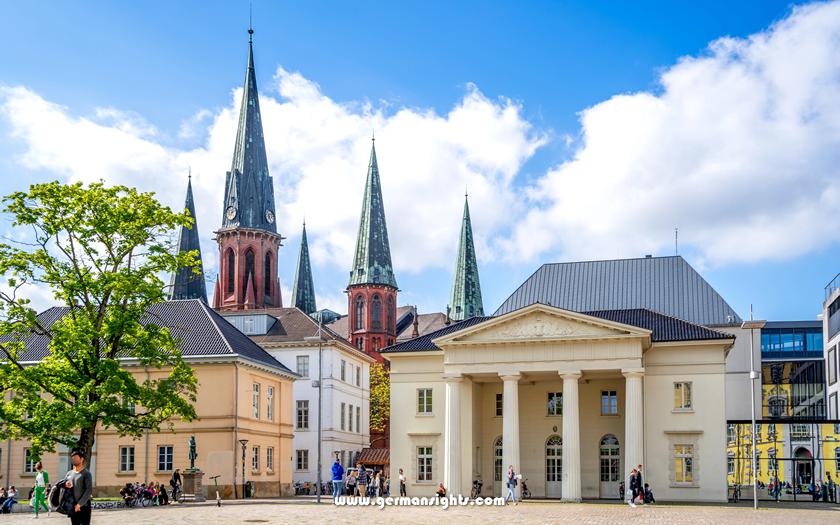
View of Oldenburg town centre
The elevation to duchy status in 1774 ushered in a period of significant change. The ruling duke pursued Enlightenment-era reforms, commissioning buildings that still define the city centre today, expanding educational institutions and laying cultural foundations that Oldenburg continues to draw upon.
However, Napoleon's conquest of northern Germany interrupted this progress. French forces occupied the city in 1806, imposing conscription, new taxes and Napoleonic law, before being defeated in 1813 and allowing the duke to return.
Then, at the Congress of Vienna in 1815, Oldenburg was restored and elevated to a grand duchy. Its rulers carefully protected this status throughout the 19th century through neutrality and diplomatic skill, even as Prussia and Austria competed aggressively for dominance across the German states.
The 20th century brought turbulence that reshaped nearly every aspect of city life. World War I weakened the grand duke's authority, and the German defeat of 1918 ended centuries of ducal rule when the last grand duke abdicated.
Oldenburg was comparatively less scarred by World War II than nearby Hamburg or Bremen, as its limited industrial base meant it was not considered a high-priority bombing target.
The historic centre survived largely intact, preserving an architectural heritage that many other German cities lost entirely to wartime destruction and post-war reconstruction.
The Oldenburg Palace is the centrepiece of the city's historic district. Originally a medieval castle, it became a ducal residence during the Enlightenment and now houses the State Museum of Art and Cultural History of Oldenburg. The museum's collections cover everything from local archaeology to 19th-century paintings.
Behind the palace lies the Schlossgarten, an expansive landscaped park which is perfect for peaceful walks. Created in the 18th century, the gardens feature winding paths, ponds and seasonal flowerbeds.
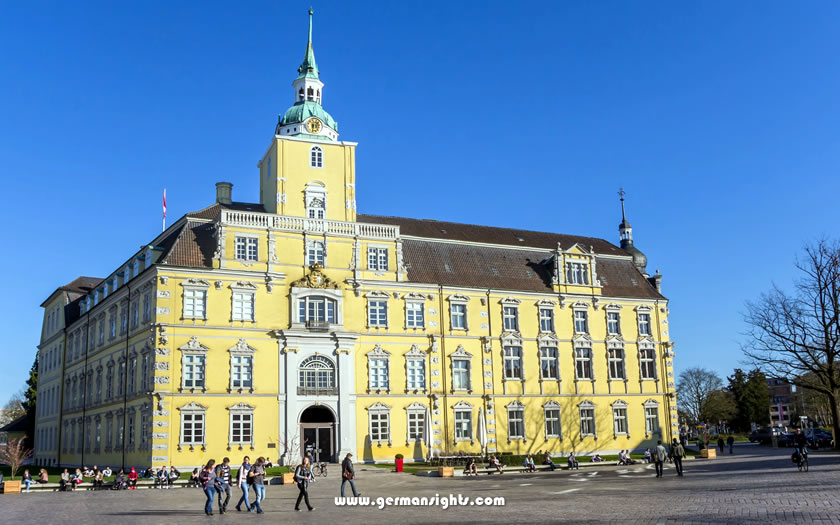
Schloss Oldenburg
For its size, Oldenburg boasts surprising cultural diversity, with several museums well worth a visit. As well as the collections at the palace, the Edith Russ Site for Media Art showcases cutting-edge exhibitions on contemporary digital media.
The Horst Janssen Museum is dedicated to the life and work of one of Germany's most famous graphic artists. It offers a fascinating insight into his creative process. Born in Oldenburg, Janssen had a complex and somewhat controversial life that shaped his distinctive style.
The State Museum of Nature and Man is ideal for those looking to delve into local history, as it offers insights into archaeology, ecology, and ethnology. Its exhibitions highlight the natural environment and early human settlements of northern Germany.
Oldenburg's Old Town is a maze of narrow, pedestrian-friendly streets lined with boutique shops and traditional markets. At the heart of the area is the Lambertikirche, a neo-Gothic Protestant church that dominates the skyline.
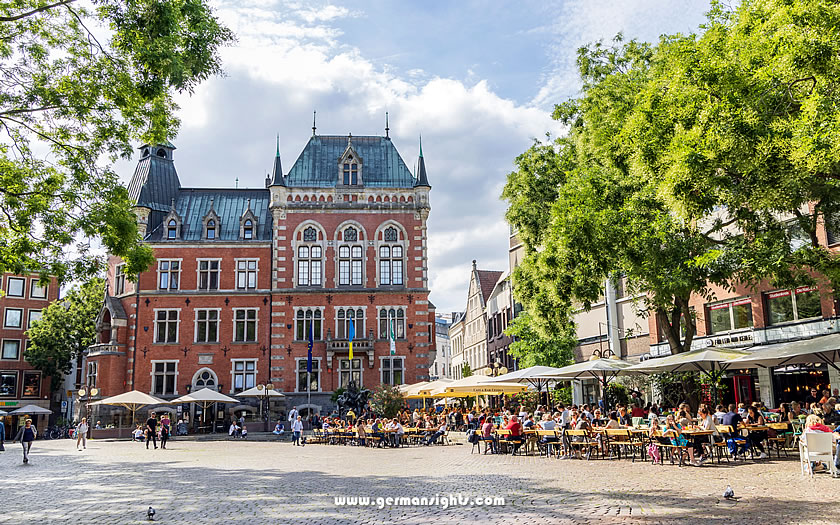
Oldenburg city hall
The best way to explore Oldenburg beyond the immediate city centre is by bike. There are plenty of rental shops that provide bikes and route suggestions for trips along the Hunte River, through the surrounding countryside or to nearby villages. The flat terrain and extensive network of cycle paths make cycling accessible even for casual riders.
Popular cycling routes include the path alongside the Hunte River heading north towards the coast. This route passes through agricultural land and small settlements. Another option is to follow former railway lines that have been converted into cycle paths, providing a car-free way to cycle through rural areas.
The Oldenburg tourist information office is located in a historic former bell tower in the old town. The tourist office is closed on Sundays and holidays and has slightly shorter opening hours on the Saturdays.
Website: www.oldenburg-tourismus.de