
The Harz Mountains rise from the North German Plain like an island of granite and spruce. This is Germany's northernmost mountain range, where peaks of just over 1,100 metres feel wilder than their modest height suggests.
Dense forests blanket steep valleys. Mist clings to the slopes most mornings. The landscape here has a different character to the postcard peaks of Bavaria — darker and more brooding, steeped in folklore that the locals still take seriously.
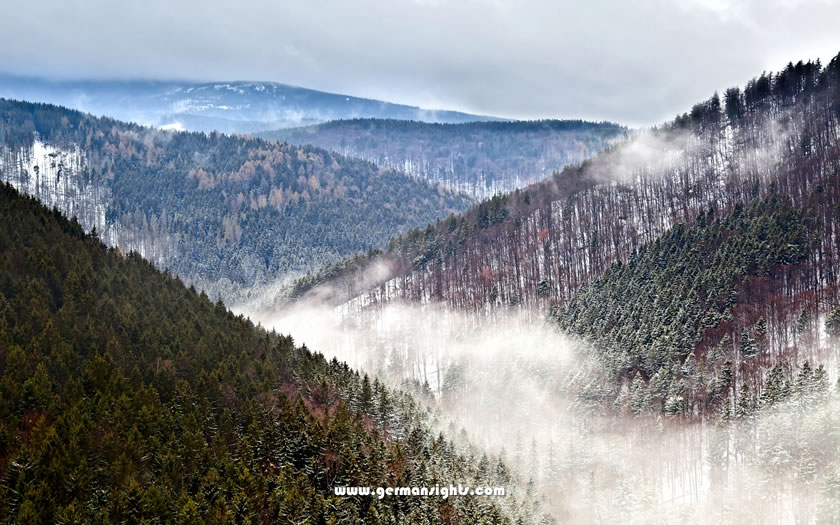
Winter mists on a Harz mountain
For almost forty years, the inner German border ran straight through these mountains. Watchtowers were built along the ridgelines. Villages ended abruptly at fences. This division shaped everything: which trails existed, which towns thrived and how the forests grew back in the restricted zones. Although reunification came in 1990, you can still see the effects if you know where to look.
The Harz is as much a part of legend as geography. Every April 30th, witches gather on Mount Brocken, the highest peak, for Walpurgisnacht. Goethe wrote about it. Heinrich Heine walked these paths. The Brothers Grimm collected folk tales from villages in the Harz region. The mountains feature in German literature more than almost any other landscape.
Steam trains still climb the narrow-gauge tracks that were built over a century ago. Half-timbered towns fill the valleys where silver miners once worked. Wild boar root through the beech forests. This is not a place that tries to be charming; it simply is, in a way that feels increasingly rare in modern Germany.
The Harzer Schmalspurbahnen (Harz Narrow Gauge Railway) is more than just a means of transport; it's a living piece of history. These narrow-gauge steam trains run all year round, connecting the towns of Wernigerode, Nordhausen and Quedlinburg with the high-altitude Brocken summit.
Riding the HSB feels like stepping back in time, with coal-fired engines puffing through forests and past secluded villages.

The historic Brockenbahn railway in the Harz mountains
The trains are both punctual and scenic, but they’re also slow; the charm lies in the journey rather than the speed. Tickets are available for single journeys or multiple stops, making them ideal for travelling between towns if you plan your itinerary around the train timetable.
Note that the Brocken route is one of the longest and most popular, especially during the peak hiking and summer seasons, so it is advisable to reserve a seat in advance.
A car offers a level of flexibility that trains cannot match. Although the mountain roads are well-maintained, they are often narrow, winding and occasionally steep. Driving is ideal for reaching trailheads or smaller villages that are not served by HSB routes. Parking is usually free or inexpensive outside town centres and near hiking starting points.
However, winter driving requires preparation, as the Harz sees significant snowfall, especially around high-elevation areas such as Torfhaus and the Brocken. Check the conditions if you are planning to visit between December and March.
Budget-conscious travellers should consider the Niedersachsen-Ticket + Ostharz. This regional rail pass allows you to travel as much as you like within Lower Saxony and parts of Saxony-Anhalt, including the Ostharz area. For one flat fee, you can travel between towns on Deutsche Bahn regional trains or buses without worrying about individual ticket prices. It's ideal if you prioritise practical connections over scenic steam routes. Bear in mind, however, that this ticket does not cover the HSB network.
Goslar earned its UNESCO World Heritage status through a thousand years of mining wealth and imperial power. The old town centre is a maze of slate-roofed buildings, narrow lanes and small squares that have changed little since medieval times. Dominating the southern edge of the old town is the Kaiserpfalz, an 11th-century Imperial Palace and a rare surviving example of Romanesque secular architecture in Germany.
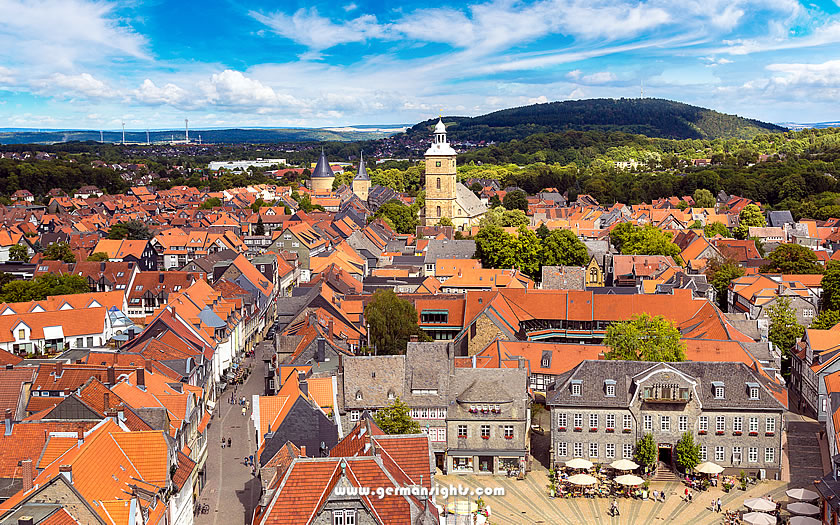
View over Goslar in the Harz region
The Rammelsberg mine is located just outside the walls of Goslar. For over a millennium, these tunnels produced silver, copper and lead. Although the mine closed in 1988, you can still tour the underground passages and see the machinery that once made Goslar one of the wealthiest cities in medieval Europe. The town has a tangible sense of importance that tourist-focused villages lack — this was a place that mattered.
👉 Find out more about Goslar
Wernigerode calls itself the 'Colourful City of the Harz', and the nickname is fitting. The streets leading to the market square are lined with half-timbered houses in red, green, yellow and blue. At the centre stands the Gothic town hall, ornate and photogenic. Perched on a hill above it all, Wernigerode Castle is visible from almost everywhere in town.

Wernigerode castle on a misty day
Wernigerode is the busiest town in the Harz because it is the main departure point for the Brocken steam train. Cafés and shops near the station are filled with tourists, especially in summer. The town has plenty of experience in handling crowds, having been a resort destination since the 19th century. If you're looking for convenience and atmosphere, look no further than Wernigerode.
👉 Find out more about Wernigerode
With over 1,300 half-timbered houses, Quedlinburg has more than almost any other town in Germany. The old town centre is a UNESCO World Heritage Site and has been preserved so completely that walking through it feels like moving through centuries. The town is anchored by Romanesque churches, with St. Servatius on the castle hill being particularly striking for its treasury of medieval religious art.

Quedlinburg castle
The town receives fewer visitors than Wernigerode or Goslar, giving it a quieter and more contemplative atmosphere. Locals still outnumber tourists on most streets. Quedlinburg is ideal for travellers who want to experience deep history without the bustle - a place where you can spend hours wandering without a specific plan.
👉 Find out more about Quedlinburg
At 1,141 metres, the Brocken is the highest mountain peak in northern Germany. Steeped in myths and legends, it is said to be where witches gather for Walpurgisnacht, a detail immortalised in Goethe's Faust.
While these supernatural tales add an air of intrigue, visitors are more likely to be preoccupied with the reality of the Brocken's notoriously harsh weather. Thick fog and strong winds are frequent companions at the summit, regardless of the season.
Reaching the top of the Brocken can be as much of an adventure as standing on it. Several well-marked trails lead up for hikers, with Torfhaus and Schierke being popular starting points.
Alternatively, the Harzer Schmalspurbahnen steam train offers a scenic ride directly to the summit, belching nostalgic plumes of coal smoke as it winds its way through dense forests and moorland. Whether you choose to hike or take the train, the Brocken is a must-see highlight of the Harz Mountains.
The Harz Mountains are a magnet for walkers. Top of the list is the Harzer Hexenstieg (Harz Witches’ Trail), a 100-kilometre route winding through forests, past cascading rivers and across high moorland. It’s the perfect choice for serious hikers looking to immerse themselves in the folklore-rich landscapes of the Harz, although shorter sections are also available for those with limited time.

Sign at entrance to the Harz National Park
There is plenty for casual walkers to love in the Harz’s network of trails. Many towns, including Wernigerode, Goslar and Braunlage, provide access to walks ranging from gentle strolls to steep climbs.
Expect secluded trails, the occasional ruin, and a surprisingly varied landscape, ranging from shady spruce forests to colourful, flower-filled meadows. The region’s charm lies in its ability to combine easily accessible outdoor activities with glimpses of history and tradition.
The best place to stay depends on what you're after. The Harz is small enough that you can reach most places within an hour, but the town you choose shapes your experience.
Wernigerode is ideal for steam train enthusiasts and first-time visitors, as the Brocken railway departs from here and connections to other HSB lines are straightforward. The town itself has plenty of restaurants and hotels, not to mention a postcard-perfect atmosphere. There will be plenty of other visitors — this is the busiest town in the region — but the infrastructure handles it well. If you prioritise convenience and don't mind crowds, Wernigerode is the obvious choice.
Goslar is ideal for travellers who want to combine history with hiking. The town feels more substantial than Wernigerode and is less touristy despite its UNESCO status. You're closer to the western Harz trails, including routes to the Brocken from Torfhaus. Goslar also has better train connections to the rest of Germany (standard rail, not just narrow-gauge), which is important if you're travelling from Hanover or Göttingen. There is enough to see and do in the town that you won't run out of things to do on rest days.
Quedlinburg is ideal for travellers who prioritise atmosphere over convenience. It's a quiet, residential town with a remarkable concentration of half-timbered architecture. Although you're slightly farther from the Brocken and the main steam train routes, regional buses connect to Wernigerode and other towns. Choose Quedlinburg if you want to end each day in a place that feels lived in rather than visited, where you can walk along medieval streets without having to dodge tour groups.
If you're looking for a smaller, more outdoorsy base, consider Thale or Schierke. Thale sits at the eastern edge of the Harz, near dramatic rock formations and the Bodetal gorge. Schierke is a tiny village at the foot of the Brocken mountain, which is popular with hikers. Both have limited accommodation and dining options, but they place you directly within the landscape rather than in a historic town centre.
Most travellers choose one base and use day trips to explore the surrounding area. The towns are close enough that changing your base mid-trip is more hassle than it's worth, unless you're spending a week or more in the region.
Where are the Harz Mountains?
In central Germany, spanning parts of Lower Saxony, Saxony-Anhalt, and Thuringia.
What’s the Brocken?
The highest peak in northern Germany (1,141m), known for its foggy weather, folklore, and Cold War history.
How do I get there?
By train or car. Major gateways include Goslar, Wernigerode, and Quedlinburg.
What’s the Harzer Hexenstieg?
A 97-kilometre long-distance hiking trail, crossing the Brocken and offering diverse landscapes.
What’s the best time to visit?
Spring and autumn for hiking, winter for snow, and summer for the fullest access to attractions.
Are steam trains really a thing here?
Absolutely! Narrow-gauge steam trains still operate lines connecting towns and the Brocken summit.
Can I visit without a car?
Yes, but a car offers more flexibility. Trains, buses, and walking trails connect most key spots.
What’s the vibe?
Medieval towns, dense forests, and folklore - less polished than other German regions, but deeply atmospheric.
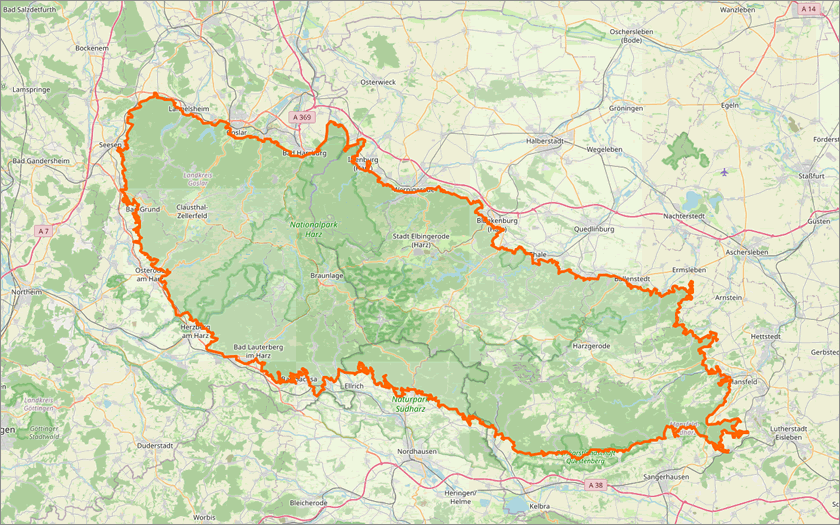
Map of Harz Region
(courtesy of OpenStreetMap)