
Osnabrück is not a city that springs to mind for many international travellers, and this obscurity works entirely in your favour. This city of 165,000 people in Lower Saxony offers what many other German destinations promise but fail to deliver: an authentic urban experience free from tourist infrastructure.
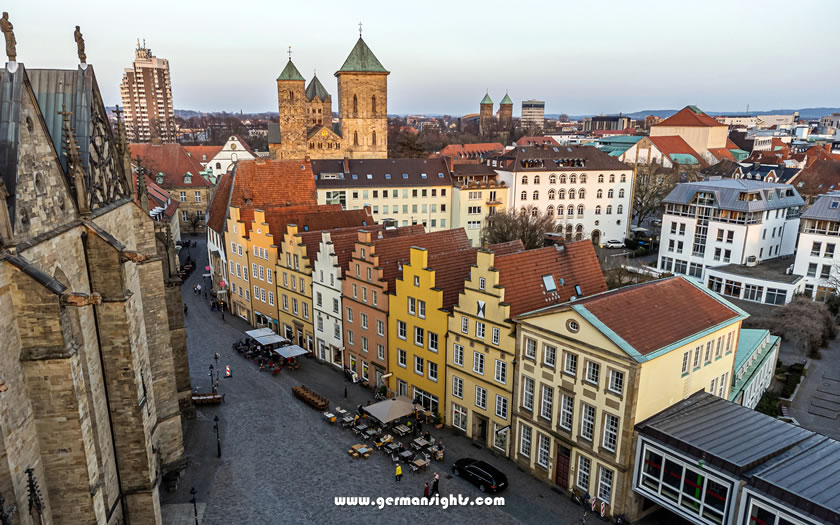
View over the historic centre of Osnabrück
The city earned its place in European history as one of the two locations where, in 1648, diplomats negotiated the Peace of Westphalia, which ended the Thirty Years' War.
The town hall where these negotiations took place is still standing, and visitors can see the rooms where diplomats argued over maps and terms for five exhausting years.
Osnabrück's medieval core fared better than many German cities during World War II, though it was not without damage. The reconstruction adhered closely enough to the original plans that walking through the Altstadt feels genuinely historical rather than nostalgic of a theme park.
Half-timbered houses lean against each other along narrow lanes. The cathedral's twin spires dominate the skyline from multiple angles.
The city functions as a traditional university town, with around 25,000 students studying at local institutions. This student population ensures a busy cultural calendar and reasonable restaurant prices. The presence of students also mean that the city stays comparatively lively after dark.
Osnabrück is located in the northwestern corner of Germany, around 150 kilometres from the North Sea coast. This puts it closer to Amsterdam than Munich, and its cultural and architectural influences reflect northern European geography more than Bavarian stereotypes.
The Teutoburg Forest rises immediately to the south and east of the city, forming a natural boundary that has historically separated Germanic tribes from Roman legions. While not dramatic Alpine terrain, the area consists of rolling hills covered in beech and oak forests, interspersed with hiking trails and small villages.
Three rivers converge near Osnabrück. The Hase flows directly through the city centre, while the Düte and several smaller waterways join it within the urban area.
At its closest point, the city lies approximately 50 kilometres from the border with the Netherlands. The Dutch city of Enschede, a similar size to Osnabrück, sits just across the border and shares economic and cultural ties with it.
Münster Osnabrück International Airport (FMO) is the closest international airport to the city, although it really only offers summer sun destinations and a very limited number of domestic scheduled flights.
Those looking for more options will need to travel further afield - the large airport at Düsseldorf probably offers the widest number of options for those flying from Europe. Visitors on intercontinental flights should probably be looking at Amsterdam Airport in the Netherlands or Frankfurt Airport. Although these airports are a fair way away from Osnabrück they do offer high-speed rail connections to the city.
Distance to Münster Osnabrück Airport: 35km
Distance to Bremen Airport:
125km
Distance to Hannover Airport: 140km
Distance to Düsseldorf Airport: 175km
Distance to Cologne Bonn Airport: 210km
Distance to Hamburg Airport: 250km
Distance to Amsterdam Airport: 250km
Distance to Frankfurt Airport: 340km
Osnabrück’s central train station (Osnabrück Hauptbahnhof) serves as a major hub for both domestic and international rail travel.
There are a number of important European InterCity routes which pass through Osnabrück, such as the ICE 77 (Berlin to Amsterdam) or the ICE 43 (Hamburg to Basel). Major German connections also run via Osnabrück, such as the ICE 42 between Hamburg and Munich or the ICE 14 between Berlin and Cologne.
Regular regional services link Osnabrück with multiple cities in the north and west, such as Hanover, Bremen and Düsseldorf.
The main Osnabrück train station is located about 20 minutes walk to the east of the city centre, although another train station (Osnabrück Altstadt), which can be reached by regional rail services, is closer.
Osnabrück lies at the intersection of several major motorways, making it easily accessible for drivers travelling in Germany or neighbouring countries.
The A1 Autobahn connects Osnabrück with Bremen in the north and Münster in the south, continuing on to cities such as Hamburg and Dortmund. The A30 runs from east to west, linking Osnabrück with Hanover, the Dutch border and the towns along its route.
If you know when you are planning to go but haven't decided on accommodation, then use the map below to get an idea of which properties are available and to compare prices during the period you wish to travel.
Enter your proposed dates and use the '+' to zoom in on a location and reveal more properties. Click on the price above a property to see more information.
(Please note that this selection will also include some guesthouses, pensions and self-catering apartments for those who are interested in that form of accommodation!)
Archaeological evidence suggests that settlements existed during the Stone Age where Osnabrück is now located.
The Romans never established a permanent presence here, however; the Teutoburg Forest to the south marked the effective limit of their expansion after the defeat by Germanic tribes in 9 AD, roughly 20 kilometres from present-day Osnabrück.
Charlemagne founded the city of Osnabrück as a bishopric around 780 AD, during his campaigns to Christianise the Saxon territories. The name probably comes from 'Osning' (an old name for the Teutoburg Forest) and 'brück' (meaning 'bridge'), referring to the city's location at a crossing point over the Hase River.
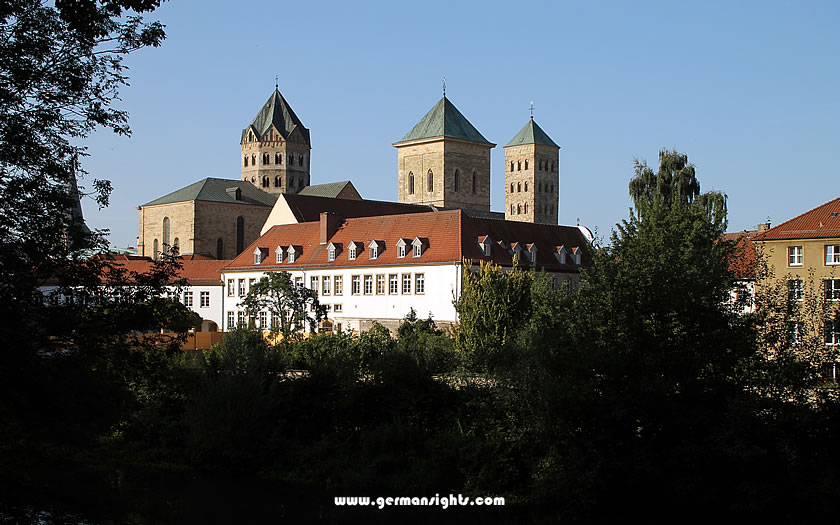
View towards Osnabrück cathedral
By the 11th century, Osnabrück had developed into a proper medieval town complete with defensive walls, a cathedral and a growing middle class of merchants. The city joined the Hanseatic League, a commercial alliance of trading cities that dominated Baltic and North Sea commerce, in the 13th century.
However, Osnabrück never achieved the same level of prominence as Hanseatic powerhouses such as Lübeck or Hamburg.
Much of central Europe was devastated by the Thirty Years' War (1618–1648), and Osnabrück experienced its fair share of occupation, siege and economic collapse. Swedish forces occupied the city several times during the conflict.
The war's religious and political complexities - Catholic versus Protestant, and imperial power versus regional autonomy - played out within Osnabrück's walls on a smaller scale.
The city's most significant historical moment came at the end of the war. Osnabrück, alongside Münster, hosted the peace negotiations that brought the Thirty Years' War to an end. Diplomats from across Europe gathered here to negotiate the Peace of Westphalia, a series of treaties that redrew political boundaries and established the principle of state sovereignty.
The Treaty of Osnabrück, which was signed in the town hall of the city in 1648, specifically addressed the concerns of the Protestants and the territorial adjustments within the Holy Roman Empire. The negotiations actually took place in Osnabrück's buildings, with diplomats living in the city for years.
Industrialisation occurred in the 19th century, though Osnabrück's transformation was more gradual than that of the Ruhr Valley to the south.
Textile manufacturing expanded, utilising the water power of local rivers and employing workers from the surrounding agricultural areas. The arrival of the railway in 1855 connected Osnabrück to broader German markets. Fuel for factories was supplied by coal mining in nearby regions, and the city's population grew from around 11,000 in 1800 to over 65,000 by 1900.
World War II brought devastating consequences. Allied bombing raids targeted Osnabrück's railway facilities and industrial infrastructure repeatedly between 1940 and 1945. By the war's end, approximately 65% of the city center lay in ruins. The medieval Altstadt, with its half-timbered houses and narrow streets, suffered particularly severe damage.
British forces occupied Osnabrück in April 1945, shortly before the collapse of Nazi Germany. The city became part of the British occupation zone, and later West Germany, when the country was divided.
Although reconstruction began immediately, it proceeded slowly due to the scale of the destruction and the limited resources available in post-war Germany. City planners were able to reconstruct some historic buildings while incorporating modern elements, which is why the city centre today mixes architectural styles somewhat awkwardly.
The university, founded in 1974, added an educational dimension that diversified the local economy beyond manufacturing.
Osnabrück’s historic old town features cobblestone streets lined with half-timbered houses. The Heger Tor, a preserved 19th-century gateway, marks the entrance to this atmospheric district.
The old market square, Markt, remains the heart of the Altstadt. St Peter’s Cathedral (Dom St Peter), a Romanesque-Gothic masterpiece dating back to the 8th century, is located here.
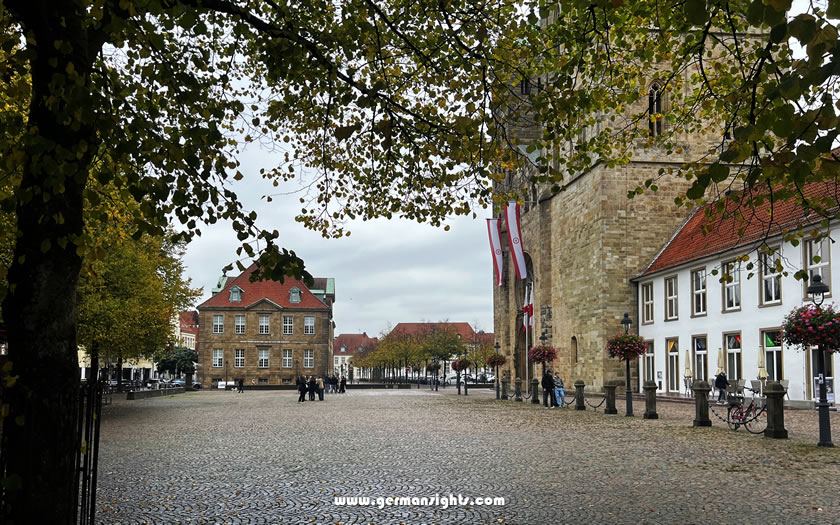
The square in front of St Peter's cathedral in Osnabrück
The Marienkirche (St Mary’s Church), another historic church with a fascinating mix of architectural styles, is located on the edge of the Altstadt.
Osnabrück’s Rathaus (Town Hall) is arguably the city's most important landmark. This 16th-century Gothic building hosted the negotiations that led to the Peace of Westphalia. The Hall of Peace (Friedenssaal) inside the building displays artefacts and portraits related to the 1648 treaties, making it a must-see for history enthusiasts.
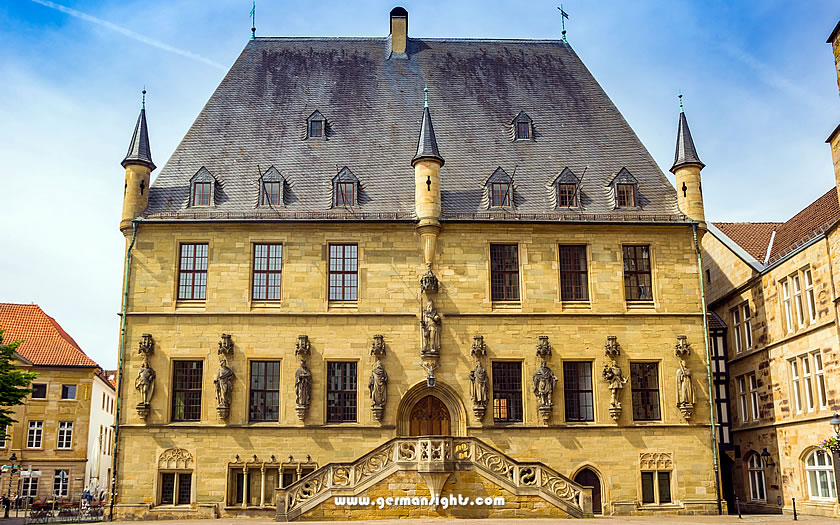
The historic town hall in Osnabrück
Schloss Osnabrück (Osnabrück Palace) was built in the Baroque style in the second half of the 17th century. The palace was destroyed during the Second World War, leaving only the outer walls, and was rebuilt afterwards. It has been home to the University of Osnabrück since 1974.
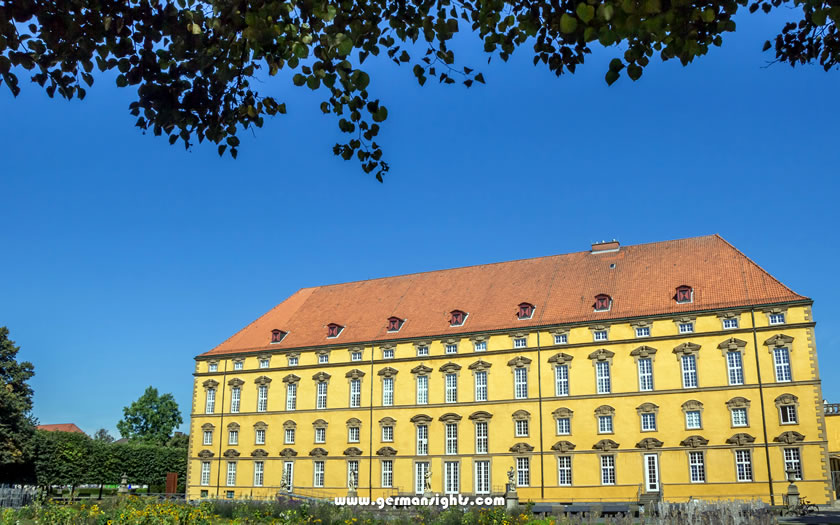
The main building and gardens at Schloss Osnabrück
The palace park to the south is modelled on Versailles and was restored in the 1960s.
Osnabrück’s industrial past is brought to life at this museum, which is located in an old coal mine. Exhibits showcase the mining and manufacturing history of the surrounding region, and there are interactive displays and guided tours that take visitors below ground into the preserved mining tunnels.
Just a 20-minute drive south of the city lies the Teutoburg Forest, one of the most celebrated natural regions in northern Germany. The area is popular with hikers and cyclists alike, who come to explore the trails leading through the atmospheric thick woods and steep hills.
Some of these routes follow historical paths associated with the Battle of the Teutoburg Forest, in which Germanic tribes famously halted Roman expansion.
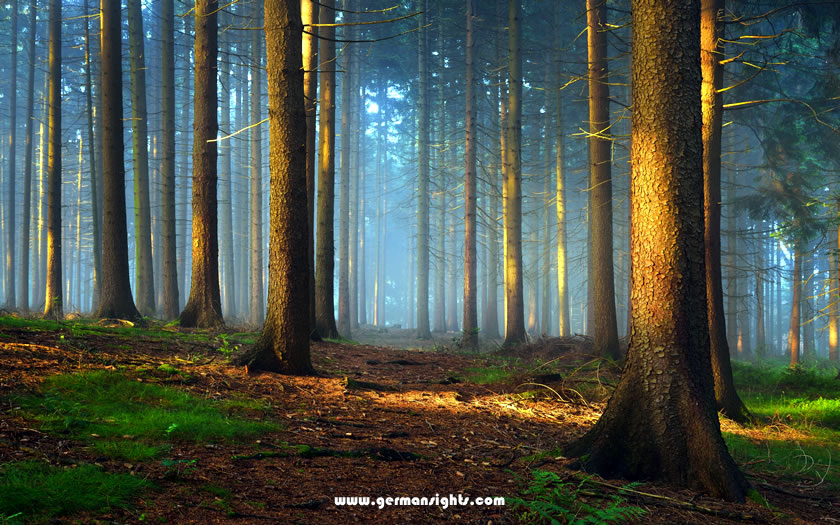
The sun's rays through the mysterious Teutoburg Forest
Many of the 'sights' in the Teutoburg Forest - such as the Externsteine rock formations or the Hermannsdenkmal monument - are a fair distance away from Osnabrück. However, the Museum und Park Kalkriese, widely believed to be the actual site of the Battle of the Teutoburg Forest, is located just under 20km to the north of Osnabrück, near Bramsche-Kalkriese.
The modern visitor centre combines archaeological artefacts with interactive exhibits that explain the course and significance of the battle. The outdoor park features a viewing tower and walking paths through the landscape where the Roman legions were defeated in 9 AD.
Excavations are ongoing here, and the museum displays Roman artefacts, including coins, weapons and armour, recovered from the site. This gives the museum a stronger historical foundation than the admittedly more romantic Hermannsdenkmal monument.
👉 Find out more about the Teutoburg Forest
The Osnabrück tourist information office is located near the historic town hall in the old town. The tourist office is closed on Sundays and holidays and has slightly shorter opening hours on the Saturdays.
Website: erleben.osnabrueck.de