
The Sauerland is located in the south-eastern corner of North Rhine-Westphalia. This region of forested ridges, river valleys and reservoir lakes is often overlooked by visitors from outside Germany.
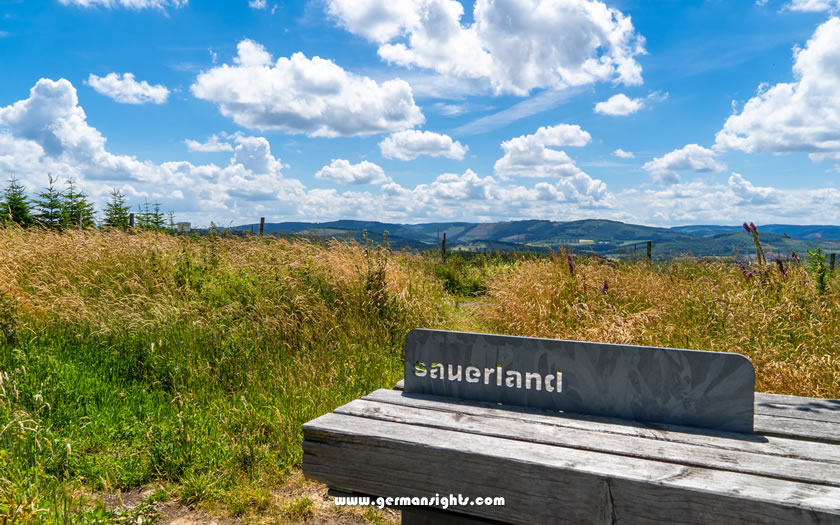
View over the Sauerland countryside
The low mountain range landscape may not be alpine in scale, but it offers genuine outdoor variety across five thousand square kilometres. Travellers looking to escape the urban sprawl of the Ruhr without flying anywhere will find that the Sauerland is the most practical green space in western Germany.
The region mainly attracts visitors from the Ruhr conurbation and the Netherlands, but it has something to offer anyone willing to look beyond the obvious. Winter ski runs, long-distance hiking trails, limestone caves and a series of reservoirs provide a surprising variety of attractions.
Contrary to popular belief, the name most likely derives from an Old Saxon word meaning 'southern land', rather than the German word for sour.
The Sauerland region covers the south-eastern part of North Rhine-Westphalia and extends partially into the district of Waldeck-Frankenberg in Hesse.
Geographically, it is firmly part of the Rhenish Slate Mountains, a broad, low mountain range that also encompasses the Bergisches Land region to the west.
The Sauerland lies southeast of the Ruhr industrial belt, forming a natural boundary between the urban lowlands and the upland interior of western Germany. Heading west, the hills gradually give way to the Bergisches Land region. To the northeast, the landscape transitions towards the Teutoburg Forest.
Iserlohn is the largest town in the Sauerland, though it functions more as a residential centre than a tourist hub. Lüdenscheid and Arnsberg, on the other hand, serve as regional administrative hubs.
The more relevant towns for visitors are located further into the uplands: Meschede, Brilon and Schmallenberg offer a more peaceful stay, while Winterberg and Willingen are well-known centres for outdoor activities and winter sports.
The Sauerland is well connected by motorway and has reasonable rail links into its main valleys. Most visitors arrive by car, but train access to hubs like Winterberg, Arnsberg, and Bestwig is practical from major cities.
Dortmund Airport is the closest commercial airport and the most convenient starting point for travellers from the UK. The main alternative is Cologne-Bonn Airport, which is better suited to visitors approaching the Sauerland from the south.
Direct regional trains run between Dortmund and Hagen via the Ruhr-Sieg line, stopping at Arnsberg and Meschede. A branch line from Bestwig continues into the uplands towards Winterberg, allowing visitors to reach the ski area by rail without a car. Willingen is less well served by train and usually requires a change of train and a short onward journey.
A car offers considerably more flexibility for most destinations in the Sauerland's interior.
The A45 motorway runs directly through the region, forming the main route from Dortmund in the north to the southern uplands. Access is also provided by the A4 from Cologne and the A44. Journey times of around an hour are realistic from the Ruhr area.
While the reservoir roads and valley routes between towns are enjoyable to drive, they can be congested in summer and on winter weekends.
The two most popular bases are Winterberg and Willingen. Alternatively, Schmallenberg, Sundern and Meschede offer a quieter experience while still providing good access to the wider region.
Winterberg is the obvious choice for anyone visiting in winter or wanting easy access to the main ski slopes and Rothaarsteig trail. It offers the widest selection of hotels, guest houses and self-catering accommodation.
Willingen is better suited to visitors interested in ski jumping, mountain biking, or a slightly less crowded atmosphere.
Both towns fill up quickly at weekends in winter, so it is important to book ahead.
If the reservoirs are a priority, Sundern is the closest town to the Möhnesee and offers good access to the wider southern part of the region.
Schmallenberg, a quiet market town nestled in a sheltered valley, is an ideal base for hiking and cycling, offering an alternative to the resort atmosphere of Winterberg.
Meschede is a practical base for travellers interested in the nearby abbey and Hennesee reservoir.
If you know when you are planning to go but haven't decided on accommodation, then use the map below to get an idea of which properties are available and to compare prices during the period you wish to travel.
Enter your proposed dates and use the '+' to zoom in on a location and reveal more properties. Click on the price above a property to see more information.
(Please note that this selection will also include some guesthouses, pensions and self-catering apartments for those who are interested in that form of accommodation!)
The Sauerland's rich iron ore deposits and extensive woodlands made it an important industrial area long before the Ruhr coalfields were developed. Lead, zinc and silver ore were extracted in parts of the region until the second half of the 20th century.
The decline of industry saw tourism become the dominant economic activity, based on the same forests and valleys that had once supplied raw materials.
The six reservoirs in the Sauerland were not built with tourism in mind. They were created to store water for the Ruhr industrial area and to control river flow.
The dams were built across smaller river valleys, forming the broad, flat lakes that now dominate much of the landscape. It was only later that they became popular recreational areas, attracting large numbers of sailors, canoeists, and cyclists.
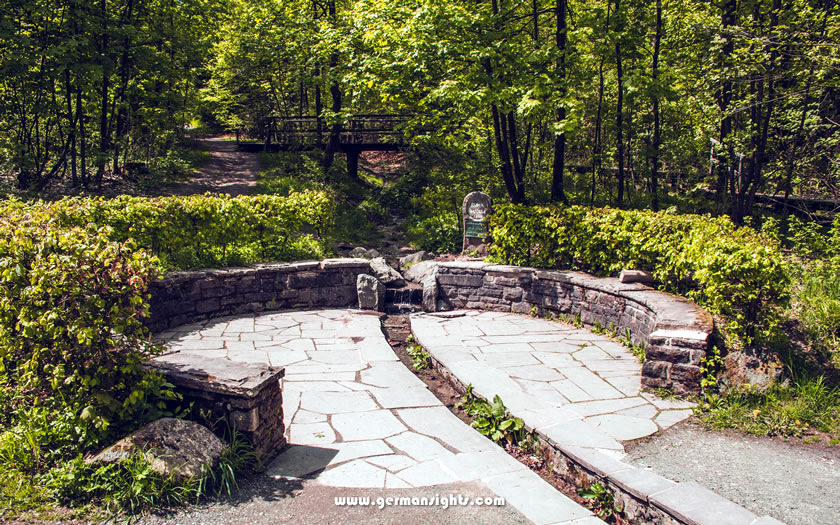
The source of the Ruhr river near Winterberg
The Ruhr area's proximity gave the Sauerland both its industrial history and its modern tourism base. The region's rivers, including the Ruhr itself, flow westward towards the urban area, carrying the water that fuelled industrial expansion in the 19th and 20th centuries.
Today, the Ruhr connection works in reverse: millions of city dwellers use the Sauerland as their nearest accessible countryside.
Winterberg operates the Skiliftkarussell, a network of ski lifts and runs that makes it the busiest winter sports area in North Rhine-Westphalia. While the runs are not comparable to those in alpine resorts in terms of length or altitude, they are ideal for intermediate skiers and families.
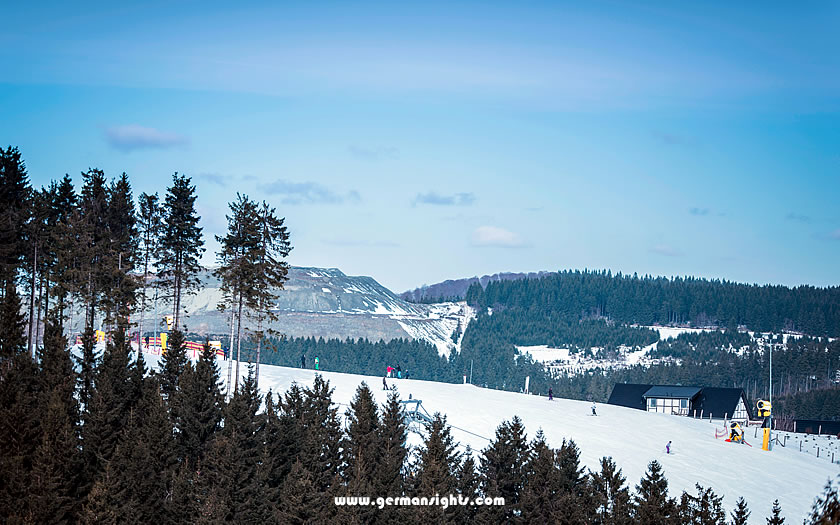
Skiing at Winterberg in the Sauerland
To the north, Willingen is better known for its world-class ski jumping facility. Both resorts use snow-making equipment, as natural snowfall at these elevations is unreliable.
The Rothaarsteig is a long-distance walking trail stretching roughly 154 kilometres through the Rothaargebirge mountains. It connects Brilon in the north with Dillenburg in the south.
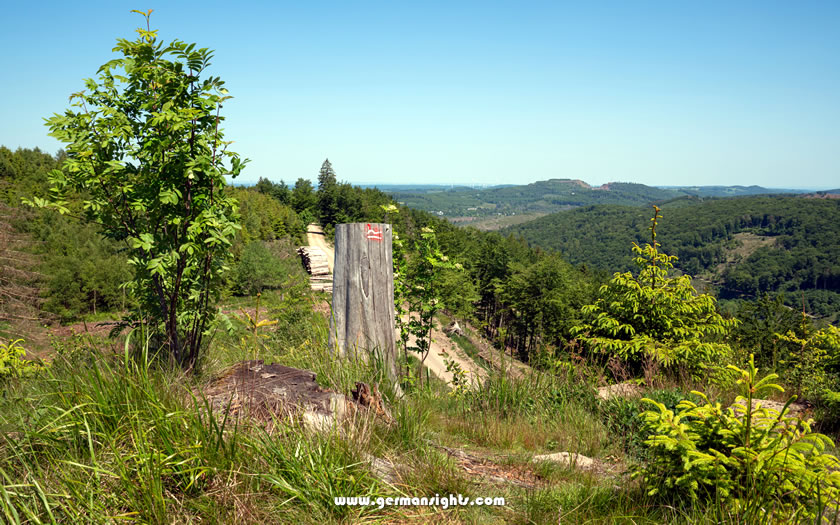
Trail sign on the Rothaarsteig in the Sauerland
The trail is well maintained and clearly signposted. Most hikers complete it in stages over several days, staying in guest houses along the route.
The Biggesee, near Attendorn, is the largest of the Sauerland reservoirs. It offers sailing and boating, as well as the opportunity to cycle around its perimeter.
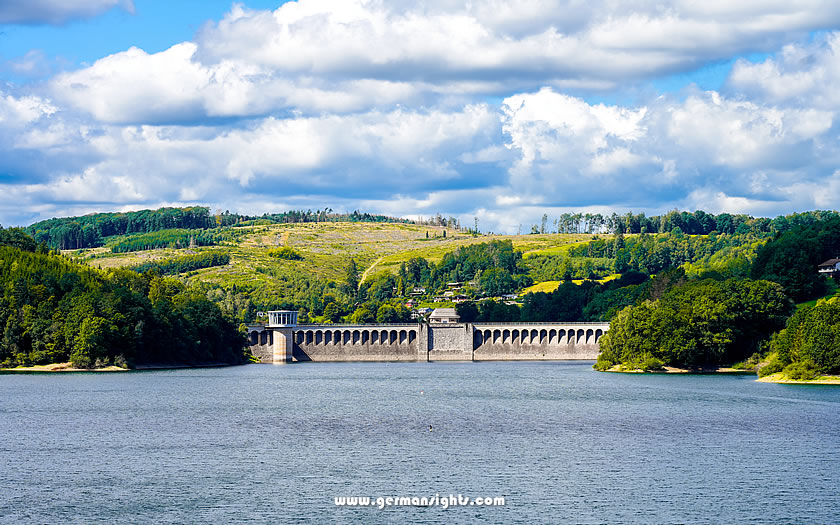
The Biggesee reservoir in the Sauerland
Further north, the broader and calmer Möhnesee is popular with families and weekend visitors from the Ruhr. The Sorpesee and the Hennesee are smaller and less crowded, making them worth visiting for some space on a summer weekend.
The Atta Cave in Attendorn is said to be the largest accessible limestone cave outside the Alps. A guided tour takes visitors through an extensive dripstone system. The Atta Cave is a natural addition to a day trip to the Biggesee area.
The northern areas of the Sauerland contain several other cave systems, including the prehistoric Balve Cave, one of the largest sites of its kind in Europe. These formations are the result of the region's limestone geology, which was formed from ancient reef deposits.
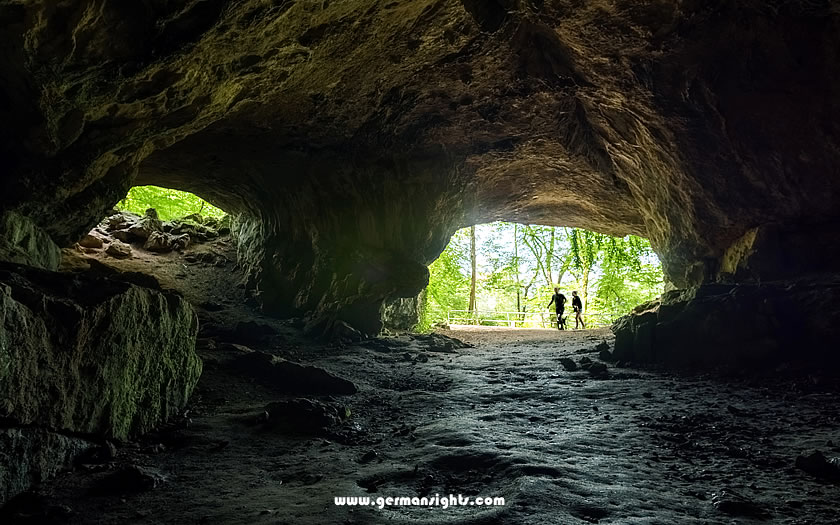
The Feldhof cave near Balve in the Sauerland
The Bruchhauser Steine, a group of volcanic rock formations near Olsberg, offer a different kind of geological interest above ground and provide views across the Rothaargebirge.