
Hanover's Hauptbahnhof is one of Germany's most well-connected railway stations.
ICE high-speed trains pass through regularly, connecting the city to major destinations across the country. Regional trains fan out in every direction, reaching dozens of towns in Lower Saxony and beyond.
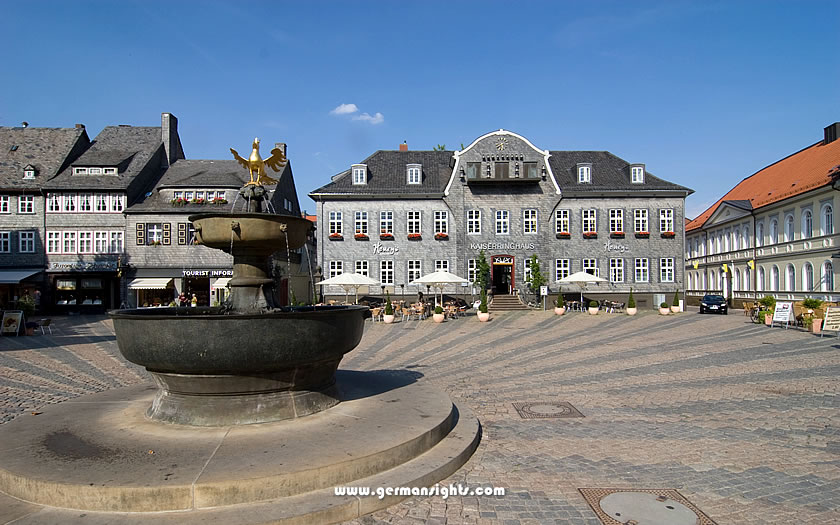
The town of Goslar in the Harz Mountains
This network makes Hanover an ideal base for exploring northern Germany without having to change accommodation.
It is a good idea to familiarise yourself with the Niedersachsen-Ticket before planning any day trips. This regional day pass allows you to travel as much as you like on RE (Regional Express), RB (Regional Bahn) and S-Bahn trains throughout Lower Saxony, as well as in Bremen and Hamburg. The ticket costs €29 for one person at the time of writing, with each additional traveller adding just €8 (up to a total of five people).
There is one catch: it only works on regional trains, not ICE or IC services. You'll travel more slowly, but the savings justify the extra time for most destinations. The ticket is valid from 09.00 on weekdays (any time at weekends and on public holidays) until 03.00 the following day.
It's available from ticket machines, online via the Deutsche Bahn app, or from the station counter. For solo travellers making even one return journey beyond Hanover's immediate suburbs, this ticket will usually pay for itself.
Why Go: The Harz Mountains provide a welcome break from the flatlands of northern Germany. Dense forests climb steep hillsides. Medieval towns nestle in the valleys, their half-timbered houses lined up along cobblestone streets. The landscape changes quickly - within an hour of leaving Hanover, you're surrounded by peaks and pines.
This UNESCO World Heritage town boasts over 1,500 half-timbered houses, some of which date back 500 years. The imposing Imperial Palace (Kaiserpfalz) dominates the southern edge of the old town.
German emperors used this Romanesque building as a residence during the Middle Ages. Inside, 19th-century murals depict scenes from German history, although the building itself dates back to the 11th century.
The market square features a 15th-century town hall and a fountain adorned with an imperial eagle. Narrow lanes branch off in every direction, revealing craft shops, cafés and more timber-framed buildings. The town's wealth came from mining silver in the surrounding mountains — an industry that shaped the region for nearly a thousand years.
👉 For a full guide to planning your visit, see our detailed Goslar travel page.
Thirty minutes further into the Harz region lies Wernigerode, a town with a different character. The town hall on the market square looks like something from a fairy tale, with its ornate timber framing painted in warm oranges and reds and its pointed turrets at each corner. It's genuinely striking, not just a tourist board exaggeration.

Wernigerode castle on a misty day
Wernigerode Castle sits above the town on a forested hill. While the current structure is largely 19th-century neo-Gothic, the site has held fortifications since the 12th century. It takes about 30 minutes to climb to the castle on foot, or a small tourist train can be taken for those who would rather save their energy for exploring it.
👉 For comprehensive coverage of what to see and do, visit our Wernigerode guide.
Direct RE trains from Hanover Hauptbahnhof take around 90 minutes to reach Goslar. Trains run approximately every hour throughout the day. Continue to Wernigerode from Goslar on a connecting regional train, which takes 45 minutes. Both destinations fall within the coverage area of the Niedersachsen Ticket, making an affordable day trip possible.
If you start early, you could visit both towns in one day, or dedicate a full day to one location for a more relaxed pace.
Why Go: Bremen carries itself with the confidence of a city that once controlled the trade routes of the North Sea. This free city was a member of the Hanseatic League and accumulated wealth and power, which is still evident in its architecture and civic pride. Its market square, listed by UNESCO, is considered one of the finest in Germany, while the Schnoor quarter's medieval lanes have somehow survived both the passage of time and wartime bombing.
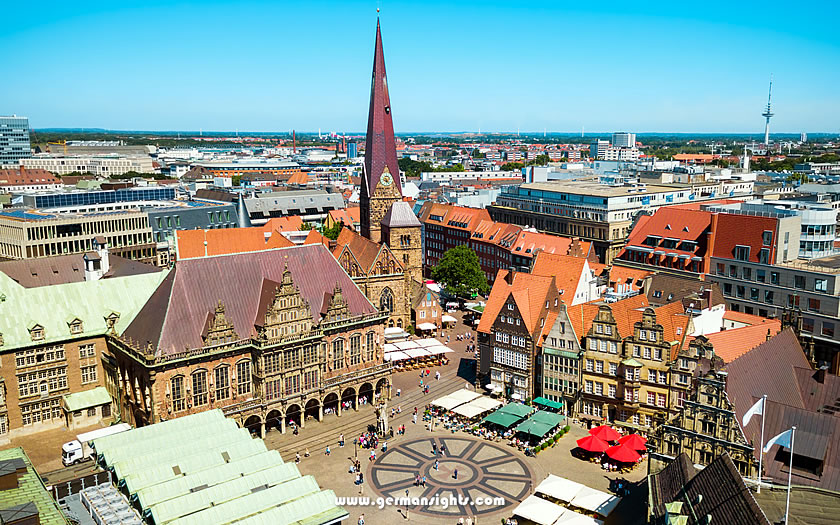
View of Bremen city centre
The Roland statue, a stone giant erected in 1404 to symbolise the city's independence and trading rights, stands guard in front of the town hall. According to local legend, Bremen will remain free as long as Roland stands.
The upper hall inside the Gothic town hall displays intricate Renaissance woodwork and paintings. The building and the Roland statue earned UNESCO World Heritage status, as they are recognised as exceptional testimony to civic autonomy in medieval Europe.
On the west side of the town hall, there is a bronze sculpture of the Bremen Town Musicians — the donkey, dog, cat and rooster from the Brothers Grimm fairy tale. Tourists rub the donkey's front legs for luck, polishing the metal to a bright shine.
ICE trains connect Hanover and Bremen in about one hour, with departures every 30-60 minutes. These trains cost more but save 20 minutes compared to regional options.
Regional RE trains take 1 hour 15-20 minutes and are covered by the Niedersachsen-Ticket. They run frequently throughout the day, making this an easy and affordable option for budget-conscious travelers. The slight time difference rarely matters unless you're on a particularly tight schedule.
👉 Find out more about the city in our Bremen guide.
Why Go: Celle doesn't just have half-timbered houses — it has over 400 of them, forming the largest continuous collection in Europe. Take a stroll through the old town and you'll be surrounded by timber frames painted in whites, creams and earth tones. Many of these are adorned with carved inscriptions and ornamental details.
Unlike Hanover's reconstructed Old Town, Celle's medieval centre was virtually untouched by World War II. What you see is genuinely old, not carefully rebuilt.

Celle in Lower Saxony
Celle is the perfect place for a half-day trip. The old town is small enough to explore thoroughly in two to three hours. Come for lunch, wander the streets and visit the palace before returning to Hanover in the late afternoon.
Regional trains (RE and RB lines) run frequently from Hanover Hauptbahnhof to Celle, taking just half an hour (depending on the service). Trains depart every 30 minutes throughout the day. The journey is covered by the Niedersachsen-Ticket.
👉 Discover more about the town in our Celle visitors' guide.
Why Go: The town of Hamelin has built its entire civic identity around a medieval mystery. According to local records, 130 children disappeared from the town in 1284. This evolved into the legend of the Pied Piper — a rat-catcher who, having been denied payment for ridding the town of vermin, supposedly lured the children away with his magical pipe.
Whether this historical event involved a children's crusade, the plague, emigration or something else entirely remains a matter of debate. What is certain is that Hamelin has never let the story go.
The town wholeheartedly embraces its dark fairy-tale heritage. Rat motifs appear everywhere, from manhole covers to shop signs and bakery windows. From mid-May to mid-September, a musical retelling of the Pied Piper story is performed by actors every Sunday at noon on the terrace in front of the Hochzeitshaus (Wedding House). It's touristy, yes, but also genuinely charming if you accept it for what it is.
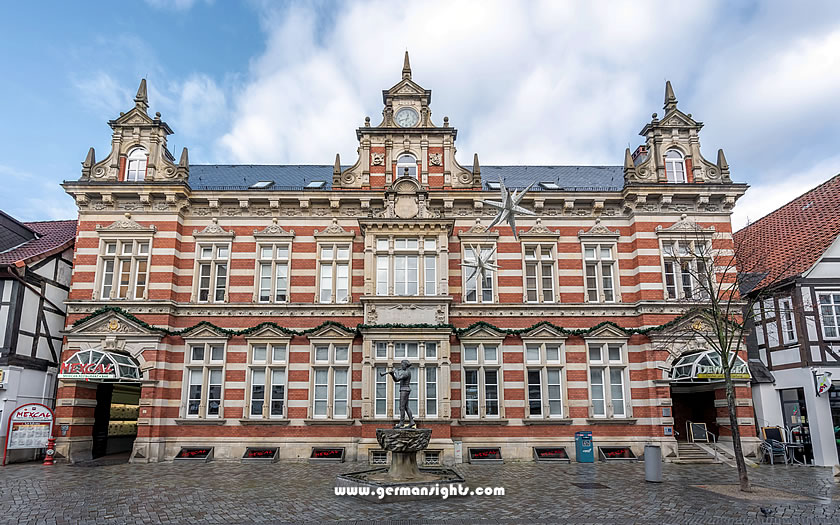
The statue of the Pied Piper in Hamelin
Looking beyond the Pied Piper marketing, Hamelin boasts exceptional examples of Weser Renaissance architecture, the distinctive regional style that flourished along the Weser River in the sixteenth and early seventeenth centuries.
Hamelin is smaller and quieter than both Bremen and Celle. The old town can be thoroughly explored in two to three hours. The town gets busier during the summer weekends, when the outdoor Pied Piper performance attracts large crowds. Visiting on a weekday offers a more relaxed experience.
The S-Bahn line S5 runs directly from Hanover Hauptbahnhof to Hamelin, taking approximately 45 minutes. Trains depart hourly throughout the day. This service is covered by the Niedersachsen-Ticket, making it an affordable option.
👉 Discover more about the Pied Piper and the town in our Hamelin travel guide.
Why Go: Hildesheim is home to two of Germany's most significant Romanesque churches, both of which are designated UNESCO World Heritage Sites. St Mary's Cathedral and St Michael's Church are prime examples of early medieval architecture — massive stone structures that have stood for a thousand years, surviving wars, fires and the passage of time itself.
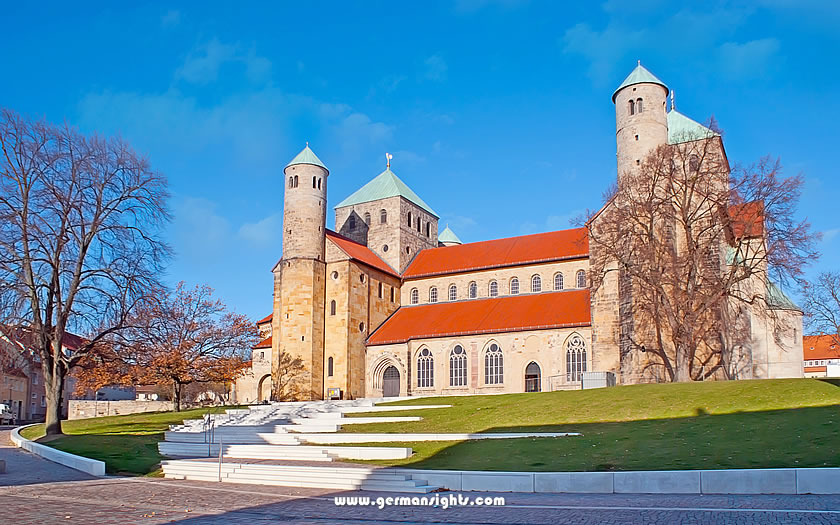
The cathedral in Hildesheim
Hildesheim suffered catastrophic damage during an air raid in 1945 that destroyed much of the medieval city centre.
The market square, which was reconstructed between 2010 and 2013, now features faithful reproductions of the half-timbered guild houses that once stood there. While the buildings are reconstructions rather than originals, the craftsmanship is exceptional.
Hildesheim is ideal for a half-day trip, focusing on the two UNESCO churches, or for a full day if you want to explore the market square, the cathedral treasury and the Römer- und Pelizaeus-Museum, which houses an impressive Egyptian collection.
Hildesheim is close to Hanover. S-Bahn services make the journey in just 30 minutes, while regional trains (RE and RB services) take about 45 minutes. Trains run frequently throughout the day - at least every 30 minutes. Services are covered by the Niedersachsen-Ticket.