
Bremen's strategic location and extensive rail network provide visitors with plenty of options for day trips to other parts of northern Germany.
The city is situated at the heart of Lower Saxony and offers direct train connections to major cities across the region and beyond, including Hamburg. This makes the city an ideal base for exploring a variety of destinations, ranging from medieval Hanseatic towns to modern port cities.
The VBN (Verkehrsverbund Bremen/Niedersachsen) transport authority operates local services within the Bremen region, including connections to nearby attractions such as Bremerhaven and Oldenburg. VBN day tickets offer economical travel to destinations within the wider Bremen area by train, bus and tram.
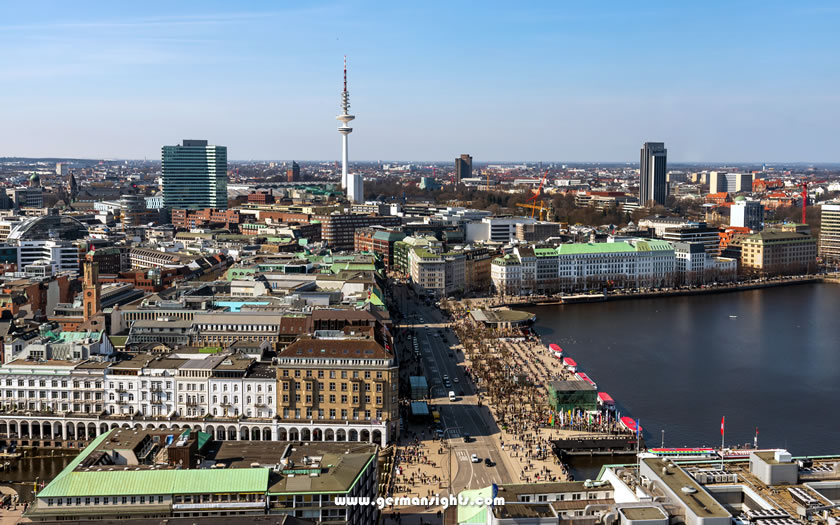
View over the Jungfernstieg and Inner Alster in Hamburg
For longer journeys, the Niedersachsen Ticket from Deutsche Bahn allows you to travel by regional train throughout Lower Saxony, taking in popular destinations such as Hanover and Hamburg.
The Quer-durchs-Land-Ticket extends your reach to cities such as Lübeck, with connections available from Hamburg for onward travel. This ticket provides travel across Germany for one day.
These regional day tickets are only valid on slower regional services, but they can offer significant savings compared to individual tickets.
It is always worth comparing the prices of VBN local tickets, Deutsche Bahn regional day passes, and individual journey saver tickets, to find the most economical option for your planned route. Regional tickets often provide the best value for longer distances or multiple stops in a single day.
Bremerhaven, located 60 km north of Bremen, serves as the city's seaport where the Weser River meets the North Sea. This working harbour city offers a range of authentic maritime experiences beyond the usual tourist attractions.
The German Emigration Centre tells the stories of the millions of people who left Europe for the New World through this port between 1830 and 1974. Interactive exhibits allow visitors to trace the journeys of individual emigrants to America. The Climate House takes visitors on a journey through different climate zones around the world.
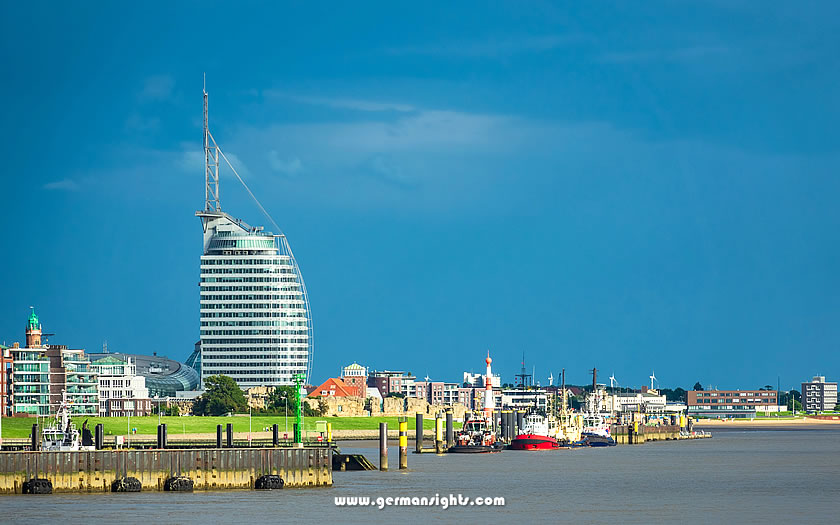
View of Bremerhaven harbour
Historic ships, including the research vessel Polarstern, float in the Old Harbour. The Maritime Museum displays authentic submarines and naval vessels. The container terminals demonstrate the modern shipping operations that make Bremerhaven Germany's fourth-largest port.
The renovated Havenwelten district combines historic buildings with modern architecture. Fresh seafood restaurants serve North Sea specialities. The area around the harbour offers enjoyable walking routes.
There are regular trains between Bremen central station and Bremerhaven every hour, taking 45 minutes. A VBN day ticket covers the entire journey within the Bremen transport region.
Oldenburg, situated 45 km west of Bremen, retains the refined atmosphere of a former royal residence. The Grand Dukes of Oldenburg left behind an elegant city centre complete with impressive palace grounds and cultural institutions.
The Oldenburg Palace houses state rooms displaying original furnishings from the time of the dukes. The palace gardens extend into a large park, which is perfect for strolling through.
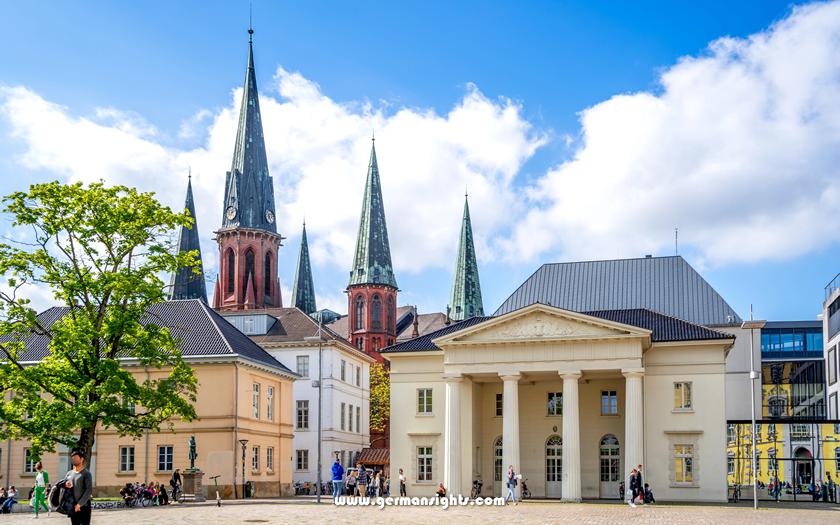
View of Oldenburg town centre
The compact old town boasts well-preserved architecture from various historical periods. The pedestrian zones make it easy to explore on foot. The city's university brings a youthful energy to the traditional streets lined with cafés and shops.
Oldenburg's theatres and concert venues uphold the high cultural standards established during the era of royal patronage. The Horst Janssen Museum displays works by this important German graphic artist, who lived in the city.
Thanks to the city's manageable size, you can see the major sights in a single day while enjoying a relaxed pace.
Direct trains run frequently from Bremen train station, taking just over half an hour. Single tickets to Oldenburg can be bought from VBN, while the Lower Saxony day ticket provides convenient options if planning on doing more travel in the region during the day.
👉 Find out more about Oldenburg
Hamburg, just one hour north of Bremen by train, offers big-city attractions with a maritime character. Germany's second-largest city built its fortune through international trade via its vast port on the River Elbe.
The historic Speicherstadt warehouse district features red-brick Gothic Revival architecture alongside a network of canals. This UNESCO World Heritage Site now contains museums, restaurants and the impressive Miniatur Wunderland model railway. The adjacent HafenCity district is Europe's largest urban development project.
St. Pauli's famous Reeperbahn entertainment district comes alive after dark, while the Sunday morning fish market starts before dawn. The Elbphilharmonie concert hall, with its distinctive glass wave structure, has become Hamburg's new landmark.
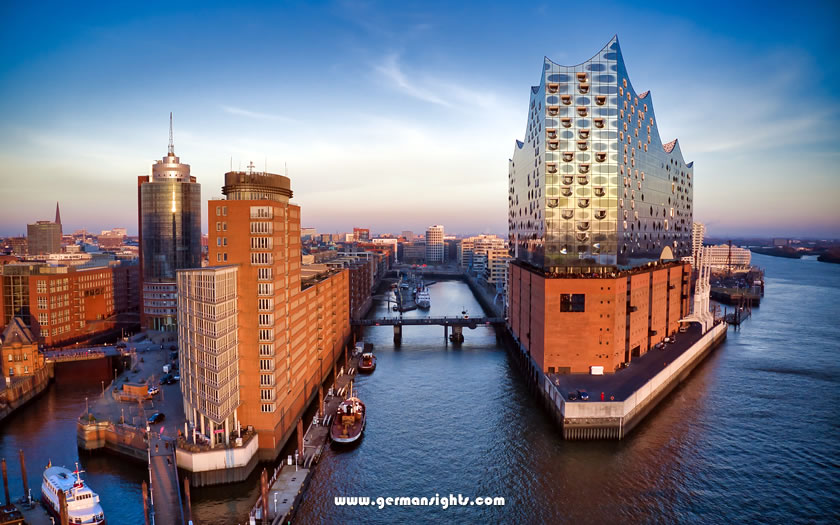
The iconic Elphilharmonie concert hall in Hamburg
Take a harbour tour to see container ships and historic vessels. The International Maritime Museum displays maritime artefacts in a former warehouse.
Direct trains run frequently from Bremen Hauptbahnhof. A Lower Saxony day ticket covers the return journey on the slower regional trains (around 90 minutes), while saver tickets can be found for the faster InterCity Express services (around 60 minutes).
Hanover, located 120 km southeast of Bremen, combines the political importance of being the capital of Lower Saxony with cultural attractions and remarkable gardens. The city was rebuilt after World War II, with historic areas preserved.
The impressive dome of the New Town Hall overlooks Maschpark and the city centre. The old town, centred around the Market Church, retains its medieval character, with its half-timbered houses and cobblestone streets.
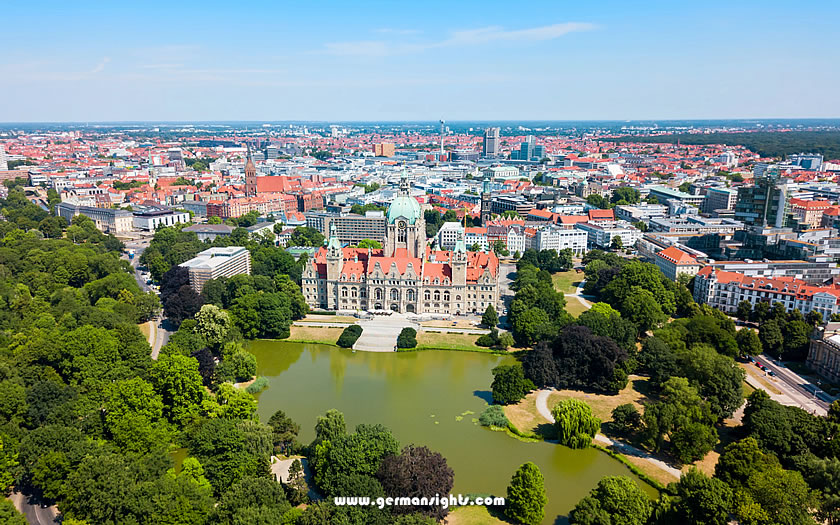
View of Hannover city centre and the New Town Hall
Hanover's greatest treasure is the Royal Gardens of Herrenhausen, widely regarded as one of Europe's finest examples of Baroque garden design. The Great Garden features geometric patterns, fountains and a maze. The palace has been reconstructed and now houses a museum.
The Sprengel Museum displays important collections of modern art. The zoo features themed landscapes representing different continents.
The Red Thread, painted on the streets, helps visitors find their way to the city's main attractions.
Direct trains connect Bremen and Hanover hourly, taking about 1 hour and 15 minutes. A Lower Saxony day ticket covers the journey.
Located 120 km southeast of Bremen, Lüneburg offers a fascinating glimpse into medieval Germany. This former Hanseatic League city built its wealth on salt mining, which funded the stunning brick Gothic buildings you see today. The historic center remains largely intact with its original street layout.
The magnificent Town Hall dominates the Am Sande market square with its elaborate facade spanning several centuries. St. Michael's Church features the famous leaning tower that tilts noticeably due to ground subsidence from old salt mines. The German Salt Museum explains how "white gold" shaped the city's destiny.
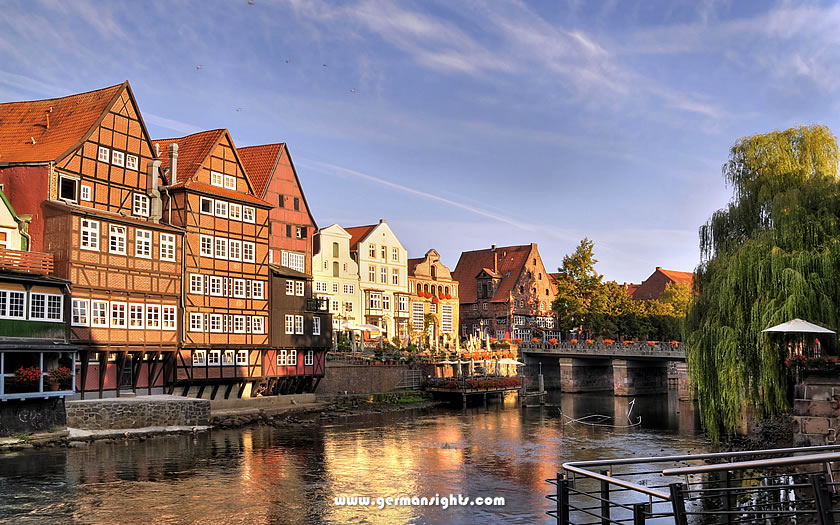
Historic Lüneburg
Narrow cobblestone streets wind their way through colourful, gabled houses that once belonged to wealthy salt merchants. The Old Crane Harbour shows where barges once loaded precious cargo. You can explore the university quarter, where the presence of students brings energy to the ancient streets.
Local restaurants serve Heidschnuckensuppe, a traditional soup made from the sheep that graze on the nearby Lüneburg Heath. The compact old town is perfect for walking around.
Regular trains connect Bremen to Lüneburg in just under two hours with one change in Hamburg. The journey requires a Lower Saxony day ticket.
👉 Find out more about Lüneburg
Lübeck, located 150 km northeast of Bremen, is the best-preserved medieval city in northern Germany. Known as the "Queen of the Hanseatic League", it controlled Baltic trade for centuries, creating the wealth that financed the construction of its extraordinary Gothic architecture.
The old town sits on an island surrounded by water, and its distinctive skyline is dominated by seven church spires. The Holstentor gate is the city's symbol and houses a Hanseatic history museum. St Mary's Church inspired the construction of Gothic churches throughout the Baltic region.
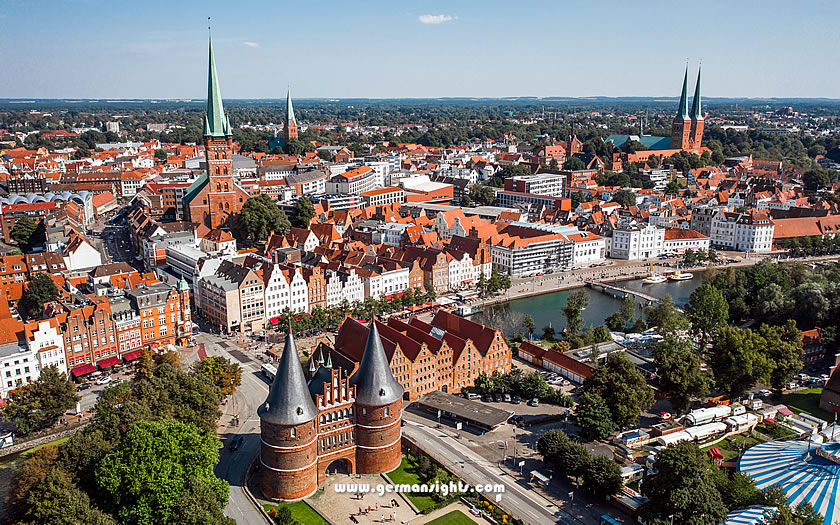
An aerial view over Lübeck
Narrow streets wind their way through the town, passing tall merchant houses with distinctive stepped gables. The town hall is an impressive complex that combines Gothic and Renaissance elements. Lübeck is the home of marzipan, and visitors can explore the original Niederegger shop and museum.
The compact historic centre is perfect for walking around. The remarkable preservation of the old town earned it UNESCO World Heritage status.
Trains from Bremen require one change in Hamburg, with a total journey time of around two-and-a-half hours.
Those using Bremen as a base for Lower Saxony might be tempted to travel a little further south to the Harz region.
This low mountain range rises in southern Lower Saxony and extends into Saxony-Anhalt. The highest peak is the Brocken, which stands at 1,141 metres (3,743 feet). Forests cover most of the slopes, creating a dark and atmospheric landscape that has inspired German folklore.
Goslar is located in the western part of the Harz. Its Old Town has UNESCO status thanks to its well-preserved medieval and Renaissance buildings. The Rammelsberg Mine, which is also listed by UNESCO, operated for over 1,000 years. Tours descend into the shafts and demonstrate mining techniques from various historical periods. Visiting these sites takes a full day.
If you're in the area, Quedlinburg, just across the border in Saxony-Anhalt, is also worth a visit. Over 2,000 timber-framed houses line its streets, making it one of Germany's best-preserved medieval towns.
The narrow-gauge Harz Railway runs steam trains to the Brocken summit. The journey from Wernigerode takes about 90 minutes. It's touristy, but the views are scenic.
👉 Find out more about the Harz Mountains